BoardGameWire is proud to be sponsored by:

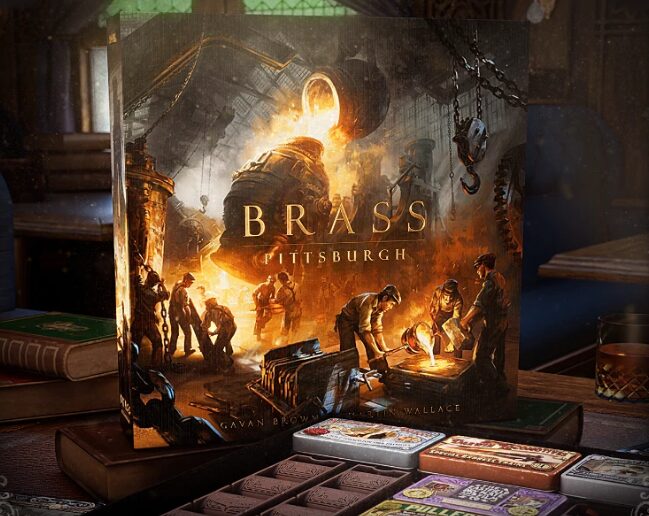

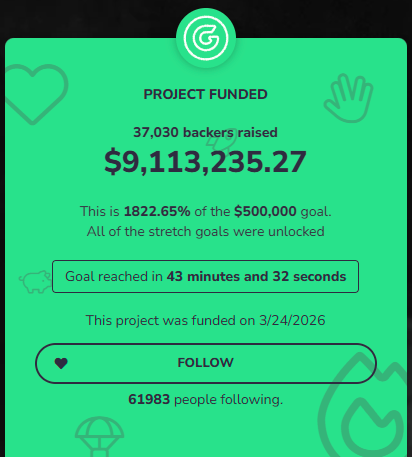
The follow-up to the top ranked game on BoardGameGeek, Brass: Birmingham, was always like to attract significant attention for its crowdfunding campaign. For Roxley Games’ Brass: Pittsburgh, that interest converted into more than $9.1m, securing the biggest board game crowdfund of 2026 so far and one of the top ten tabletop gaming raises of all time. Roxley CEO Gavan Brown, who co-designed Pittsburgh alongside original Brass creator Martin Wallace, spoke to BoardGameWire about soaring past his expectations for the crowdfund, avoiding the ‘arms race’ of deluxe editions, the advantages of Gamefound over Kickstarter and overcoming the campaign’s biggest mis-step.
BoardGameWire: Congratulations on the crowdfund! It’s obviously been a massive success, in terms of raw numbers – are these the kind of levels you were anticipating prior to launch, for backer numbers and total funding, or were they above or below where you’ve ended up?
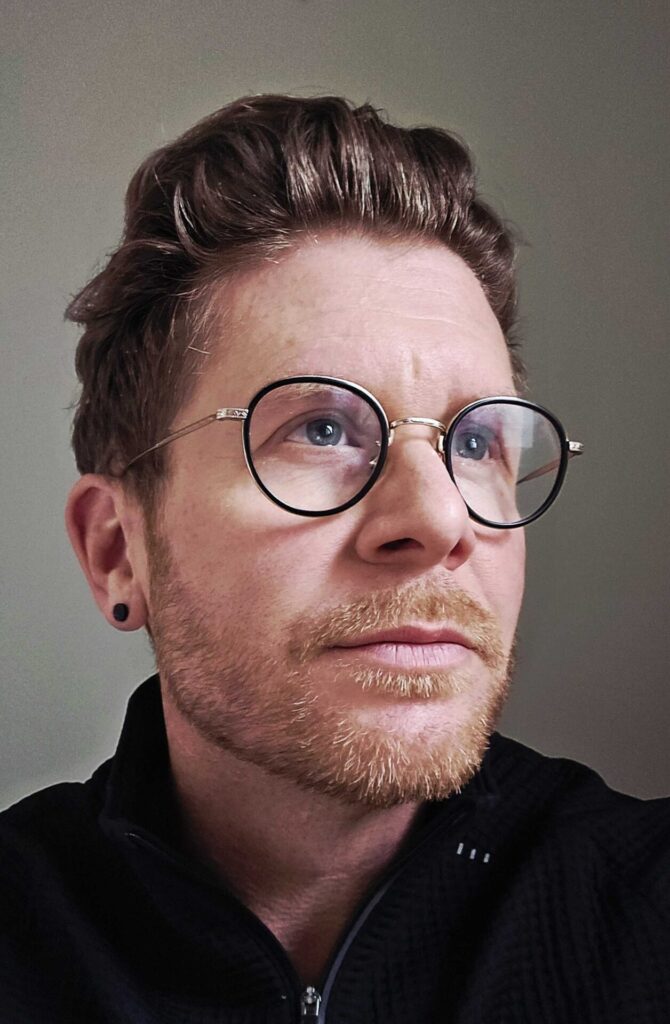
Roxley Games CEO Gavan Brown: I thought $4m was most likely. If the community and fans felt like we nailed the game, it was POSSIBLE (but highly unlikely) to hit as high as $8m. On the low end, if it funded below $2m I would have felt that we must have dropped the ball in some way, only because of how respected Birmingham is.
I think there are plenty of people out there who would look at this campaign and say ‘well of course it performed well, it’s the sequel to the number one game on BGG’. Can you speak to the advantages you might have had going into making this game, in terms of it being a success – and also the ways in which you had to make sure you didn’t take crowdfunding success for granted?
I’ve said before that starting this project, it felt like we were making The Matrix 4. It’s going to be nearly 10 years between the two titles, so we can’t wait this long and just throw something together. Obviously, there is a cohort of fans who are going to back it regardless, because it’s Brass. On the other hand, Brass players enjoy playing a 3-4 hour economic simulation game about the industrial revolution, so needless to say, they are also some of the most savvy gamers in the hobby who would be absolutely uninterested in a cash grab. So I realized before we started that we would need to create a sequel that fires on all cylinders. Which luckily, that’s the always the objective of myself and Roxley.
How long has the development process been for this one, and what would you say were the major changes that you made as playtesting and development went on?
The research went on for years prior to me even beginning. I also kept a document where I would jot down ideas of new mechanisms and dynamics that I wanted the game to feature when they popped into my head. Heavy development for Pittsburgh started in November of 2024. I began working on it every single day of the week.
I am the type of designer who will gut an entire system if it’s not working how I want to. There is basically no level of redesign that I will refuse to undertake if I believe that the change will make the game better. There were many massive, large-scale redesigns of the system in Pittsburgh, but the largest one was fundamentally redesigning how oil was consumed.
Initially, oil was only consumed by the kerosene industry. But as time went by, we realized that this resource not being consumed by manufactured goods reduced the competition and interdependence between players, which I feel is a core defining principle of Brass. As I researched oil and its relationship with manufactured goods, I discovered that a massive amount of crude oil was also processed into lubricants used in the making of manufactured goods.
What was your professional take on the board game crowdfunding environment prior to launching – both for crowdfunding in general, and for higher-priced, deluxe games. Did you make any specific changes / have any particular strategies for the crowdfund based on your knowledge of the current environment?
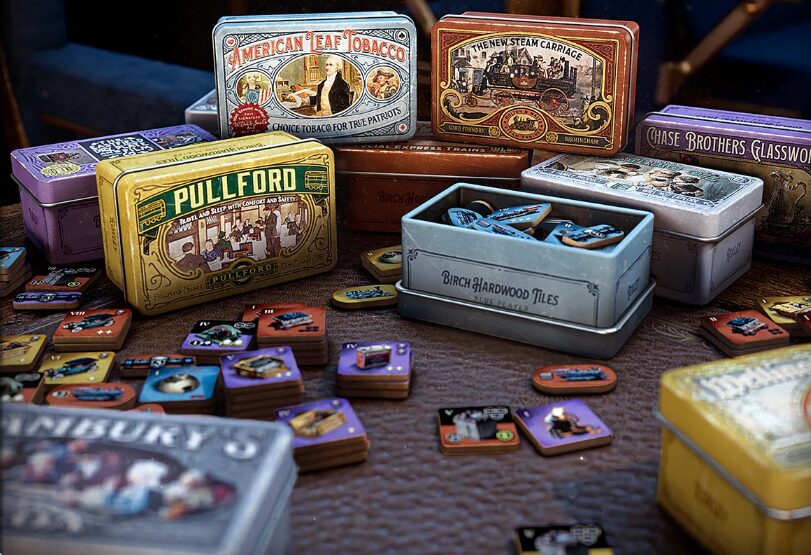
The strategy of many publishers is to create deluxe editions of their games to increase average order value. They need to increase average order value because they need the product to cost enough to fuel the advertising needed to fuel the campaign. Roxley was one of the first companies to start leaning into deluxe editions of board games, simply because I (and our team) love the experience of playing games made from high-quality materials.
So to us, the Collector’s Edition represents the most pure vision of the game. While we do put immense care into the retail ‘Essentials’ version of our products, this is always done after we realize the pure vision of our Collectors Editions. To us, the Collectors Edition is the painting, and the retail is a print. Both can be beautiful, but the painting is made from different stuff.
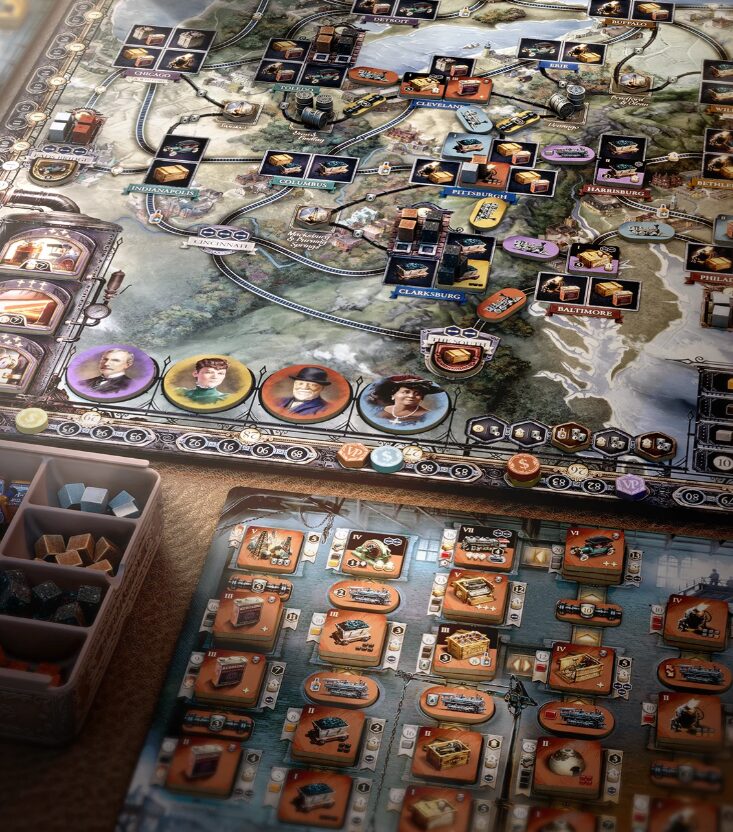
So we win because we get to make our ideal version of the game, and it’s a win for the consumer because if we sold the Collectors Edition through retail distribution, it would need to cost over $200. Deluxe Editions across the hobby have become sort of an arms race, with endlessly scaling scope, physical size, number of boxes, vac trays, and plastic in the boxes.
Our strategy: we do not pay attention to any of this. In fact, we often do the opposite. We focus on making our games as physically small as possible to respect your shelf space. We also choose materials that feel innovative and fit the aesthetics of the game, rather than just adding more plastic miniatures (unless the creative direction or game design calls for them).
My motto regarding innovation in product and game design is: we aren’t trying to make the ‘next thing’, because someone is making that as we speak. Instead we are trying to make the ‘next next thing’. We spend a great deal of time studying manufacturing methods used outside of boardgaming. For example, yesterday I recorded a video of a nice velvet texture on the inside of a friend’s new Volvo, wondering how we could apply same texture on a vac tray.
This was your first campaign on Gamefound, after ten on Kickstarter across more than a decade. Why did you decide to switch for this campaign, and has it persuaded you to stick with Gamefound for your next one?
We do not have any allegiance to any crowdfunding platform. We see them a tool used to realize creative expression, and Roxley will always use the best tool for the job. But in recent years, Kickstarter has mostly remained the same while Gamefound has been silently innovating and refining its service.
So our decision to use Gamefound was based on them currently being the best tool for the job.
What did you find where the biggest advantages to using Gamefound as the campaign went on – and were there any aspects which you’d expected to be more beneficial than they were?
Here’s a few ways we Gamefound is currently leading over Kickstarter:
What do you think was the most important thing you learned from running this campaign generally, in terms of preparing for future crowdfunds – and maybe for providing others with advice on running theirs?
Our biggest misstep was not communicating the total value of the Collector’s Edition on day one of the campaign. Every single component of the Collector’s Edition was intended to be upgraded by the end of the campaign. We wanted to ‘surprise’ everyone with these upgrades as the campaign progressed. But Brass already had a deluxe edition released previously, so while the final form of the Collectors Edition does represent immense value, the way it was initially presented did not adequately communicate this.
We corrected this by discarding the concept of stretch goals (Funding Quests), for this campaign, unveiling all of them in text form on day four, and then doing a spotlight on each one of these upgrades for each day of the campaign. This change immediately got us back on track.
My advice to other creators:
I think one of the notable aspects of this campaign was the weekly drip-feeding of content updates and reveals from August through December last year, prior to the campaign launch. Is that a strategy you’ve employed before, what was the impact of doing things that way (in terms of e.g. backer numbers, online conversation etc), and would you make any changes to the way you approached it, in hindsight?
This is probably the best thing we did for the campaign. I don’t think any campaign had utilized prelaunch updates to the level that we had during this campaign. Usually, creators do updates talking about all the new cool components, materials, mechanics, and effort put into the game during and after the campaign. But during the campaign, you need to focus on very short concise messaging to try to get a conversion. After the campaign the customer is already getting the game, and it doesn’t help you sell more.
But talking about this before the campaign launches allows the players to form a bond with your game and your team before the campaign even launches. If they like what they hear and what they see, they will follow your campaign, which greatly increases hype, followers, and if your updates are interesting and from the heart, it will also increase sales.
There’s been discussion online from people upset at what they see as a high price level for this campaign – but then more than 37,000 people have backed it to the tune of over $9.1m. Can you speak a little to why you went the direction you did with this campaign – deluxe components, for example, rather than a more basic, more affordable production?
The Essentials Edition is priced at the exact same MSRP as we sell Brass Birmingham for in Target. It was also pointed out on BGG that after adjusting for inflation, Brass Pittsburgh: Essentials Edition is cheaper than the 2007 Treefrog Games Edition.
The Collectors Edition provides immense value, and as discussed would need to be priced at upwards of $200 if sold through retail distribution.
I hear retailers talk about margins all the time, and their need for reaching levels of about 50% for individual titles. Is the pricing of Pittsburgh going to provide any challenges on the retail side, do you think, or are you confident the numbers will work out for both Roxley and retailers of the game?
Target is regarded as having the most price-conscious demographic in the market. Brass Birmingham currently sells well in Target at $80. We don’t forsee this being any different for Pittsburgh.
How concerned are you about the impact of further US tariffs changes on producing and delivering Pittsburgh – and what kind of tariff hike could Roxley reasonably absorb before additional fees would have to be charged to backers?
The tariff situation has been evolving rapidly, and we’re keeping a close eye on it. For US backers, applicable tariffs are effectively a VAT. This is something international customers have always navigated, and now the US is in the same boat.
What were your expectations around endgame, and what impact has it ultimately had on the game and on the crowdfund for Roxley overall?
We have never done end game before, and I had never even heard of it until [Roxley director of operations Kira Peavley] said it was running for our campaign. The Gamefound folks reached out to us a few days prior to the campaign ending and suggested we create a little trinket that backers could add to their pledge in order to keep the timer going.
Because the campaign had done so well, we also decided to come up with an exclusive gift for everyone who backs copy Brass: Pittsburgh collectors edition on Gamefound. Because this gift was to be exclusive to Gamefound, it could not be gameplay related, as Roxley does not offer gameplay-related crowdfunding exclusives (we want people to be able to buy all game content after the campaign). So, we came up with the idea of doing an artfolio that would feature Brass’ artwork from Mr. Cuddington that they’ve created over the years. It will even feature a fabric cover, as you would see in a high-quality hardcover book.
When the campaign shifted to Endgame, the funding amount was $7,869,841, so it has generated over $1m in extra funding. As for how much impact it has had, that is up for debate: Some of our previous campaigns that have generated an additional 75% of additional funding while the pledge manager was open. But honestly, that doesn’t matter to us… we are very happy with the funding level we have reached, and it makes us happy to reward each of our backers with this extra item as a thank you to them.