
BoardGameWire is proud to be sponsored by:




Steamforged Games has slashed the all-in price for its deluxe special edition of eurogame Terra Mystica just three hours after launching the crowdfunding campaign, after a flurry of early complaints from potential backers about the high amount being charged.
Steamforged CEO Rich Loxam told BoardGameWire the company had been surprised by the weight of feeling from potential backers over the $389 price of the all-in ‘Town Founder’ pledge level, which he acknowledged “placed it out of reach for many”.
The company took just three hours to cut the price for that tier by more than a quarter, to $288, and is currently in discussion with original Terra Mystica publisher Feuerland about lowering the prices of the other tiers in the campaign.
The Terra Mystica special edition is the latest in a string of deluxified crowdfunds for popular eurogames, which began with Awaken Realms’ blinged-out version of Stefan Feld’s Castles of Burgundy three years ago.
The huge success of that Gamefound campaign – more than €2.9m raised, which rose to more than €5.7m through late pledges – has inspired a series of follow-up crowdfunds for other classic euros featuring renewed artwork and plastic miniatures.
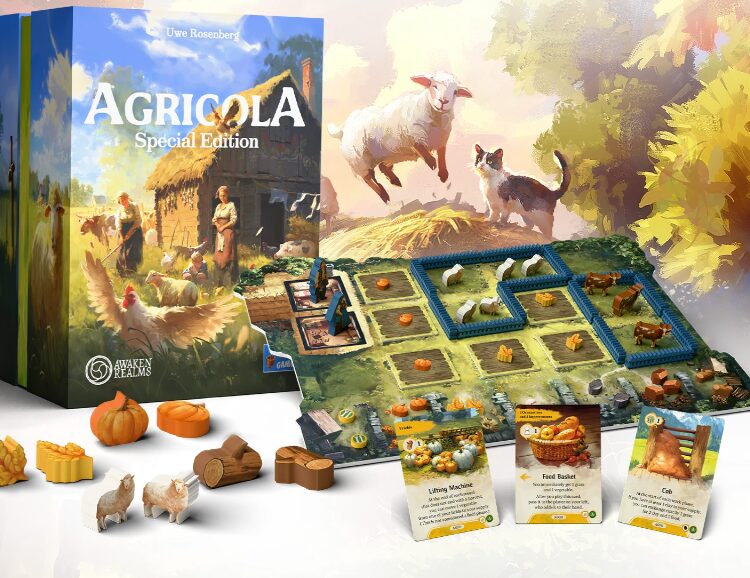
Last December Awaken Realms’ special edition of Puerto Rico raised more than $3.6m from over 18,000 backers, while in May this year the company’s deluxified version of Uwe Rosenberg’s medieval farming eurogame Agricola pulled in over €5.1m from more than 23,000 backers.
The Terra Mystica campaign has not gotten off to the same rapid start as its peers, however. Agricola’s special edition had picked up almost $1.5m from nearly 6,000 backers in its first 24 hours, while Steamforged’s campaign has only just passed $500,000, and 1,800 backers, with about 23 hours of the campaign gone.
Speaking to BoardGameWire about the pricing complaints, Loxam said, “It was certainly a surprise. We’d done a fair amount of benchmarking beforehand and, while it’s always difficult to compare directly because components aren’t always an exact match and campaigns vary in structure, our pricing was broadly in line with recent, similar campaigns.

“I think a lot of it comes down to perception of value. In crowdfunding, presenting multiple, smaller products can look higher value, and miniatures can also add perceived value compared to triple layer boards, metal coins, and unique faction illustrations for the screen-printed wooden pieces.
“It’s a subtler kind of premium that doesn’t immediately have the same visual ‘wow’, but will mean a significantly improved experience on the tabletop.”
Loxam said Steamforged would now be “subsidising” the price drop for the all-in tier, adding that the decision meant the company had “brought our margin down as far as we responsibly can”.
He said, “As a publisher, we have a responsibility to both our community and team. The idea that anything above production cost is pure profit doesn’t reflect the realities of bringing a project like this to life.
“There are ongoing costs that exist regardless of scale, from developing and redesigning components and art to project management, logistics, and support.
“What changed here was that more backers than expected were interested in getting the top-tier pledge. That meant we could revisit our assumptions, lower the price, and accept a smaller margin while still covering costs and delivering the Special Edition to the quality it deserves.”
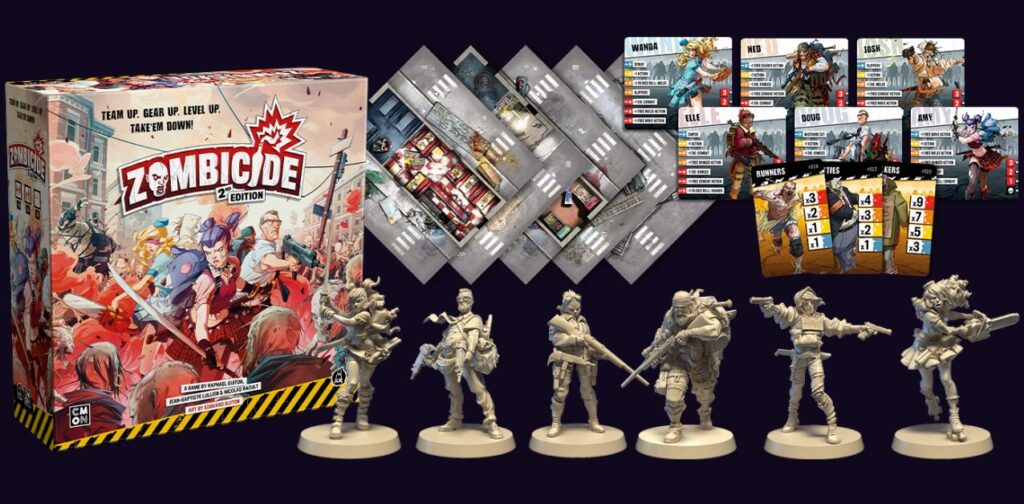
Board game crowdfunding has had a meteoric rise over the last decade or so, after games such as miniatures-heavy co-op zombie battler Zombicide helped pioneer the fundraising model following its launch on Kickstarter in 2012.
That boom continued through the Covid-19 pandemic as lockdowns drove interest – and budgets – towards activities that could be done at home.
But the last two years have begun to see high-profile casualties in the crowdfunded board game segment, with heavyweight publishers such as Mythic Games and CMON suffering massive financial hits amid volatile shipping costs, tighter personal budgets for buying games, and the impact of US tariffs on their Chinese-manufactured products.
Loxam told BoardGameWire, “There’s no question recent events have affected backer confidence. When large, high-profile campaigns run into trouble, it understandably makes people more cautious.
“Backers aren’t just investing money, they’re investing trust, and often over a long period of time. What’s been harder to see is how that caution has spilled over into how other tabletop creators are viewed by the community.
“It’s understandable backers are more cautious, but it can be disheartening to feel that mistrust. We pour a huge amount of passion and effort into bringing these games to life, and aim to give realistic costs and delivery timelines that let us deliver on what we promise, even during uncertain times.
“Ultimately, we’re a team of tabletop gamers who started out in the corner of a local gaming store. We’ve never failed to deliver a project in over ten years of running crowdfunding campaigns, and we’re fortunate to have strong retail and distribution pipelines, so we’re not dependent on crowdfunding to survive.”
He added, “It’s clear tighter budgets across the board are affecting spending decisions. Players still want to support tabletop creators, but they’re prioritising more carefully, which means comparisons that might not have mattered as much before now carry more weight.
“How many miniatures do I get here compared to there? How many expansions come in this box versus that one?
“That can put publishers in a tricky position, especially when working on existing games with fixed content. The production and creative effort are still significant, but the ability to simply ‘add more’ isn’t always there, particularly when you’re working under licence and respecting the vision of the original creators.
“Payment options like Stretch Pay definitely help, because they give people more options and flexibility to manage their support over time.
“Ultimately, though, crowdfunding has always been about collaboration. Backers need to feel heard, valued, and understood, which is why we spend so much time in the comments.”
Steamforged, which was launched in 2014, scored early success with its tabletop adaptation of the Dark Souls video game, raising more than £3.7m from over 31,000 backers through a Kickstarter campaign in 2016.
The Manchester-based publisher has since run a string of multimillion-pound crowdfunding campaigns for tabletop versions of other major video game properties, including raising more than £3.4m for Monster Hunter World: The Board Game and over £3.2m for Elden Ring: The Board Game.
The last year, however, has also seen Steamforged expand out the scope and scale of its operations, with it acquiring miniature fantasy wargame Warmachine, hobby and painting line Formula P3 Paint and the Iron Kingdoms roleplaying series, as well as the IP for 6: Siege – The Board Game from failed crowdfunding major Mythic Games.
Loxam said that while tabletop crowdfunding had evolved over the past decade, some fundamentals of the process hadn’t changed.
He said, “Perceived content volume is still one of the biggest drivers of pledges. Backers tend to equate ‘more boxes” or visible content with higher value, whereas quality-of-life upgrades, even in a deluxe edition, don’t always carry the same immediate weight.
“What’s changed more recently is the landscape around crowdfunding. The biggest players in the space have set expectations that can be difficult for mid-sized publishers to meet, especially when background costs vary so widely from publisher to publisher.
“Things like whether artwork is created by humans or generated by AI, whether development is handled in-house or outsourced, or whether the project carries a licence and the overheads associated with that… all of these factors have a huge impact on project costs which are invisible to backers.
“There’s also the global climate. Longer lead times, increased quality checks, higher shipping costs, greater competition for factory space as more games go into production, and more localisation requirements as larger backer audiences understandably want games in their own language.
“All of which add layers of time, complexity, and expense that need to be managed, funded, and resourced, often over several years.
“…all of the above means pricing in 2025 looks different to pricing in 2018, but we’re still as committed to delivering quality and value, and doing things better with every project.
“Ultimately, crowdfunding is still thriving, and it remains one of the greatest platforms for growing a community, but both creators and backers are navigating a much more complicated ecosystem than before.

[…] High price complaints, sluggish start sees Steamforged slash Terra Mystica special edition all-in pr… […]
[…] High price complaints, sluggish start sees Steamforged slash Terra Mystica special edition all-in pr… […]
[…] Those commitments include seven currently unfulfilled crowdfunding campaigns which raised more than £15m including late pledges, for titles such as Monster Hunter World Iceborne, Elden Ring: Rot & Sorcery, Helldivers 2: The Board Game and the special edition of classic eurogame Terra Mystica. […]
[…] previously told BoardGameWire during Steamforged’s Terra Mystica Special Edition campaign last November that “backers […]