BoardGameWire is proud to be sponsored by:


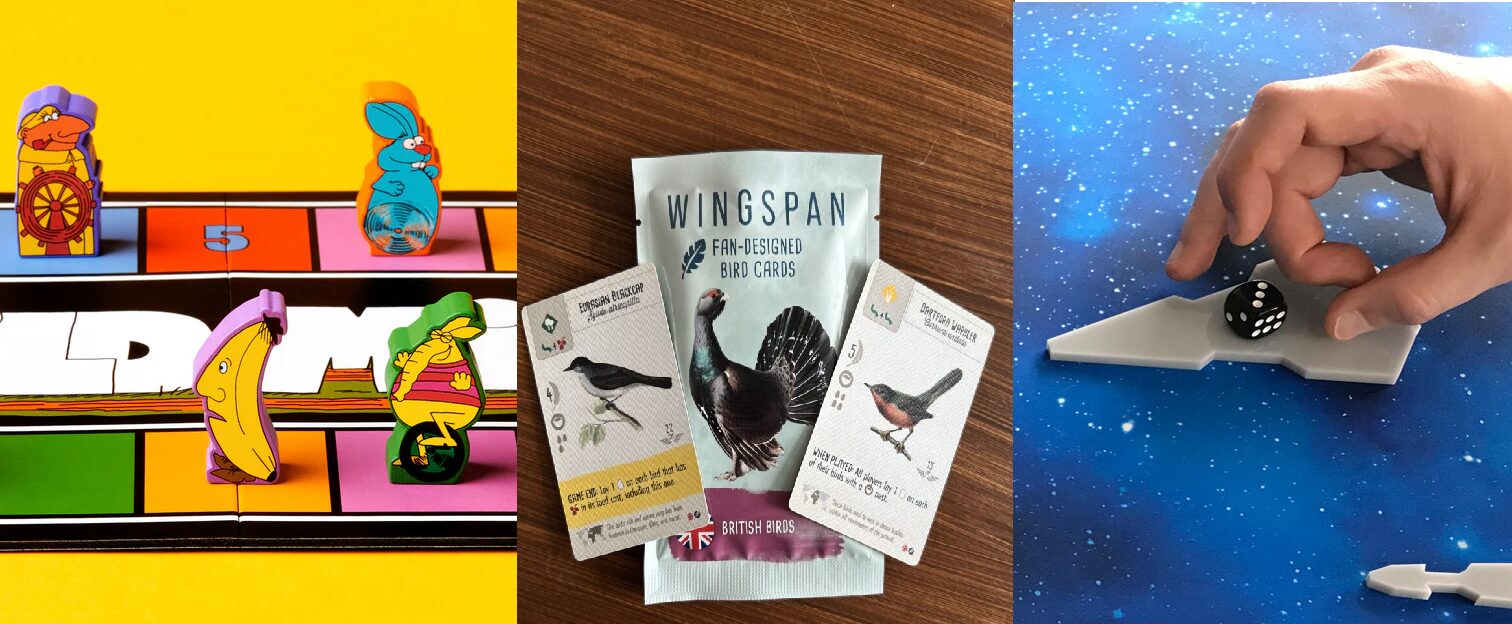
Homebrew designs and fan-made rules and variants have been part of hobby board gaming for as long as the pastime has existed, ranging from small tweaks and rebalancings to new characters, scenarios and wholesale redesigns and makeovers. While much of that design work remains fully separated and unofficial, available largely through forums such as BoardGameGeek, some publishers have leaned into utilising design work from fans in their published games. BoardGameWire spoke to a trio of publishers – Jamey Stegmaier from Stonemaier Games, Alex Hague from CMYK Games, and Jackson Pope from Eurydice Games – about how they’ve approached bringing in fan-made ideas for their titles.
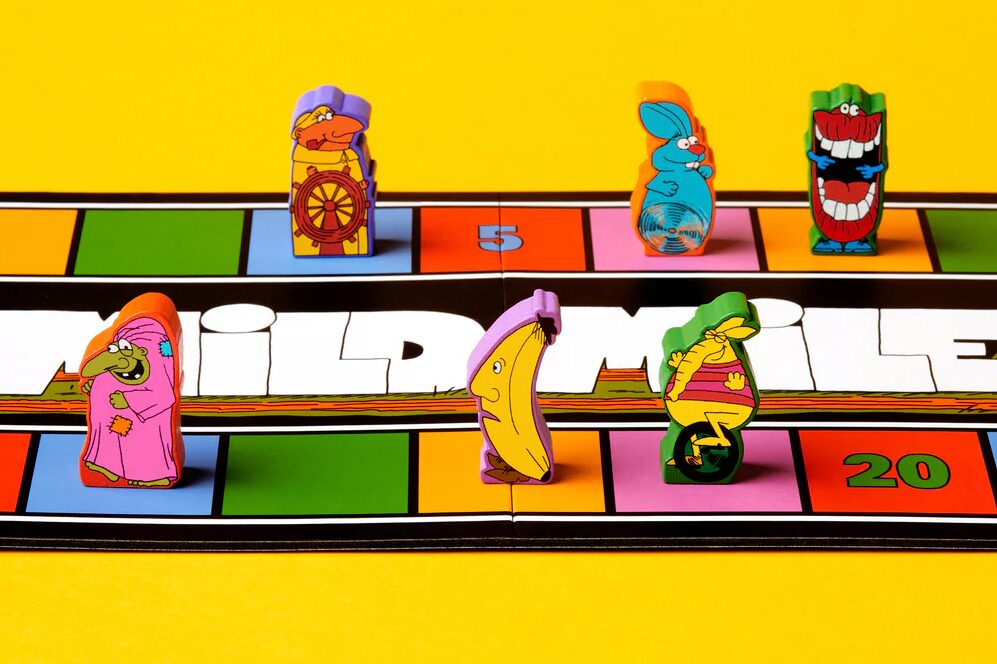
Last week Alex Hague from CMYK Games – publisher of titles including Quacks, Monikers and Wavelength – took to the BoardGameGeek forums to call on fans of Richard Garfield design Magical Athlete to send in their ideas for new racers. CMYK hopes to utilise the best designs in upcoming expansions for the titles, offering a cash reward and rulebook credit for any designs that make it to the published release.
BoardGameWire: Did you always have this in mind after deciding to re-release Magical Athlete, or is this something that’s grown out of the game community?
Alex Hague: Not originally, but I know [Magical Athlete designer Richard Garfield] is really inspired by the Magical Athlete fan community and respects so much of the design coming out of it. And he advocated for that to be part of Magical Athlete more formally.
When did you begin to realise that getting fan designs into the game might be a possibility – did they begin pitching you, before your recent BGG post asking for racer designs?
We started seeing ideas pop up the moment we announced the rerelease: fans posting their old custom sets, talking about their favorite and least favorite racers from the OG release, etc. And so many of the racer ideas were creative and high quality! Magical Athlete is modular by nature – every racer is its own little micro-design—which makes it really well-suited to fan creations being able to drop into the game.
You’ve gone for a $100 flat fee and a booklet credit – did you consider going down a royalties route instead, or is that not a good fit for something like this?

For this level of contribution, a flat fee plus a credit felt like the best balance between “fair” and “not turning this into an accounting nightmare.” The goal is more to celebrate the community and invite fans into the creative process in a lighter touch way and to say “Hey, you helped shape this world, here’s a thank you,” rather than implying a designer level relationship with ongoing profit sharing. That kind of deeper project ownership, tends to require commitment over months and years, like in the case of a game’s lead designer.
How do you plan to approach racer development – do you expect back and forth with fans over their designs, or will you largely be doing the development without further input once the designs are with you?
Our priority is to capture the spirit of each fan design, and also to make sure it actually works inside Magical Athlete’s very idiosyncratic design space. The process will be something like:
1. We shortlist ideas we love
2. We do a bunch of internal development and playtesting
3. We loop back to the original creator to let them know what’s up, if we need clarification, or if changes are big enough that it feels respectful to check in
We don’t want to put too much of the burden of development on fans, since that’s more our job. But we’re also not treating submissions as a black box: if someone has a really specific vision, we want to make sure they’re comfortable with any significant tweaks.
And is this something you might consider for any of your other existing or upcoming titles?
We did this for a Monikers Kickstarter years ago, and it worked great! So for any CMYK game that has an intersection between a passionate fan community and a huge corpus of possible “micro-designs,” it’s definitely something we’d consider.
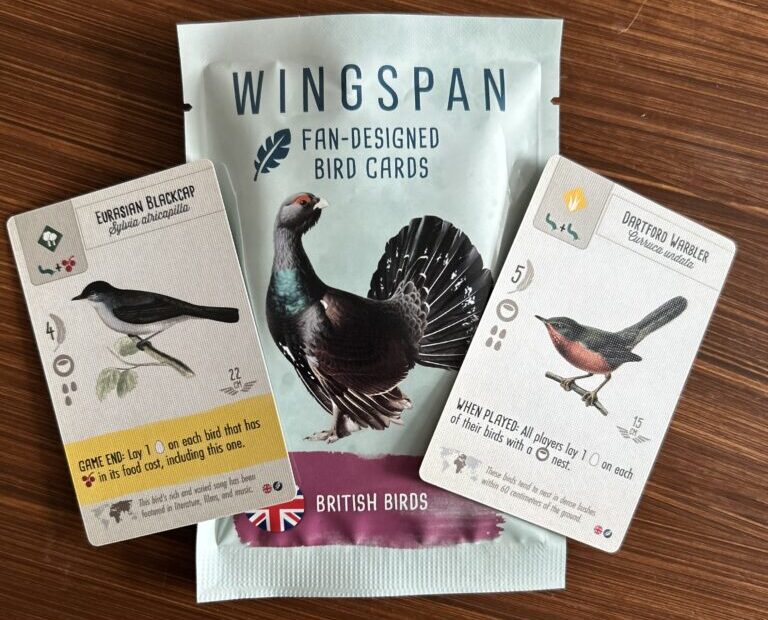
Wingspan publisher Stonemaier Games has a long history of publishing fan-created content for its games, ranging from solo modes and expansion designs to promo cards and art packs. Earlier this year company co-founder Jamey Stegmaier put the wheels in motion to print some of the best fan-designed birds to add to the 2 million-plus selling game as official promo packs, with each set focusing on a different region of the world.
BoardGameWire: Did you always have this in mind as a potential option for Wingspan, or is this something that grew out of the game’s community?
Jamey Stegmaier: This is definitely something that grew out of the community, and even beyond that, as we’ve had fans share their bird designs for years without us considering them as official cards.
When did you begin to realise that getting fan designs into the game might be a possibility – did they begin pitching you directly, or was it from seeing designs on e.g. BGG?
I started thinking about it for the first time earlier this year. I was actually looking for a way to test ForgeFire after seeing what Plaid Hat was doing with Ashes Reborn, and then I talked to Panda about trying reprints with really short lead times, and we found a way to make it work. Wingspan seemed like a great way to experiment, so I discussed it with [Wingspan designer Elizabeth Hargrave] and fan coordinator Travis [Willse], and we decided to try it.
Did the fan designs require a lot of back and forth in terms of development, playtesting, etc – and how did you approach that?
We specifically selected sets that had already been heavily playtested and discussed by the community, so the focus was more on selecting 25 birds from each set that met our guidelines for the packs and would be balanced relative to key ratios already in the game. This was followed by a detailed review for language consistency and clarity.
How did you go about deciding on how to properly recompense and credit the fan designers, and what method did you choose – Flat rate, royalties, etc – and why?
I offered the fan designers a flat rate, along with a small royalty to Elizabeth as the creator of this world. I thought flat rates were appropriate because low-price packs would likely result in insubstantial royalty amounts each month (after the initial launch) – in rare cases like that, flat rates are cleaner and more efficient. I would respect any fan designer for whom the flat rate isn’t a good fit (or fair, in their opinion) – we would only publish their card designs with their permission.
What were the major challenges around doing something like this – and were any elements of it far more straightforward than you expected?
The biggest challenge was sending the correct quantities of the first run to each of our 4 regional fulfillment centers, as this is unexplored territory for us. We truly didn’t know how Wingspan fans would respond to fan-designed cards (and if people would fully understand that these are completely new cards–these birds have never appeared in Wingspan). The only thing we got slightly wrong was not sending enough of each region’s packs (i.e., Birds of Great Britain to the UK). Oh, and we didn’t think through retailer packaging until after the first printing of the packs, which resulted in the creation of display boxes and slight packaging redesigns.
What was your rationale behind deciding to release these as their own product, rather than e.g. rolling them into a larger expansion?
Elizabeth Hargrave is the creator and designer of Wingspan and its expansions, hence why these fan-designed birds are promos, not an expansion.
And is this something you might consider for any of your other existing or upcoming titles?
I’ve worked with fans as co-designers for expansions of other games (Scythe, Tapestry, etc), along with fan designers for Rolling Realms promo realms, but Wingspan is fairly unique in terms of its card-driven composition and the number of fan creations that have been shared and playtested. Even with the rise of Wyrmspan and Finspan, the community around Wingspan specifically still far outweighs those spinoffs, so I doubt there will be something like this for those games.
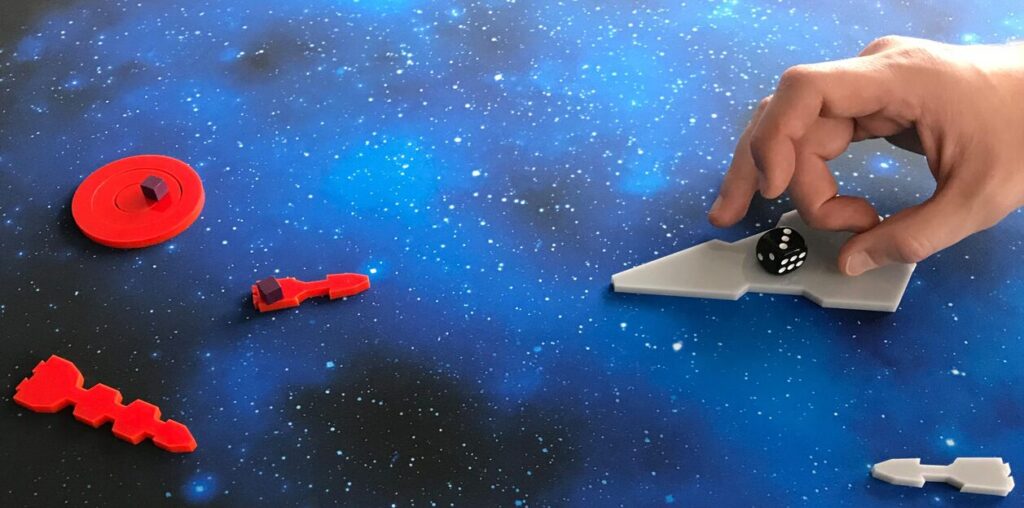
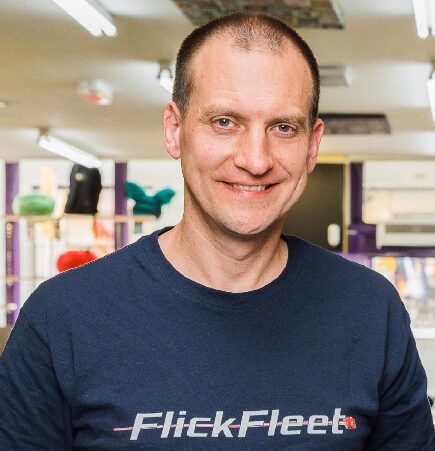
Eurydice Games director Jackson Pope has seen spaceship flicking dexterity game FlickFleet go from strength to strength since its debut Kickstarter campaign seven years ago – and a rising tide of fan support and homebrew designs for the title quickly persuaded the publisher to start incorporating them into its crowdfunded releases.
BoardGameWire: Can you give a little background about FlickFleet please – when you initially launched the game, and where you’re at now in terms of expansions etc?
Jackson Pope: We launched FlickFleet in 2018 with a Kickstarter campaign to raise funds to buy a laser-cutter so we could make it ourselves. It barely funded, but raised enough to get us underway and it’s been an evergreen game for us ever since – we’ve released a new expansion each year, and with the exception of Xeno Wars, our best ever campaign which expanded it to four players, each campaign has done better than the last.
And when did you begin to realised that getting fan designs into the game might be a possibility?
Our third campaign ‘A Box of Flicks’ was intended to be a little thing for true fans of the game during the COVID pandemic. We set a tiny £500 target and were genuinely afraid we wouldn’t succeed on the morning of the campaign. It included a number of different ships for the game, including one that had been sent in by a fan.
The next campaign was largely fan designed content, after which point we started soliciting fan ideas and making sure they got a credit on the box and a royalty payment.
How did you go about pitching fans to create designs – or did they begin pitching you first?
They came to us first, now we ask them via our Facebook page and Discord for ideas.
And how does your system work, in terms of fans receiving royalties and credit for their designs?
If we publish one of their ideas they get their name on the box and we pay them a royalty. Rather than the usual quarterly payments based on units shipped and the price charged, we just pay a lump sum based on the number of ships designed and the print run size (which is usually pretty small, because we make the game ourselves in Paul’s garage).
Are you able to give a sense of what level of royalties fans have received so far, or is it too early to say?
It depends on the number of ships they’ve designed and the number of copies of those ships we’ve made. One has now earned over £2,000.
Did the fan designs require a lot of back and forth in terms of development, playtesting, etc – and how did you approach that?
We take their ideas and then playtest them against the other ships in the set and the game, sometimes they come through almost unchanged, other times we make significant changes to either fit the core rules of the game or the set they will be a part of.
Is this something you plan to continue for FlickFleet, and any of your other existing or upcoming titles?
Definitely going to continue doing it for FlickFleet. Box of Flicks 2 was largely designed by fans of the game, and they had a lot of input on the most recent box, Box of Xeno Flicks 1, as well.