BoardGameWire is proud to be sponsored by:


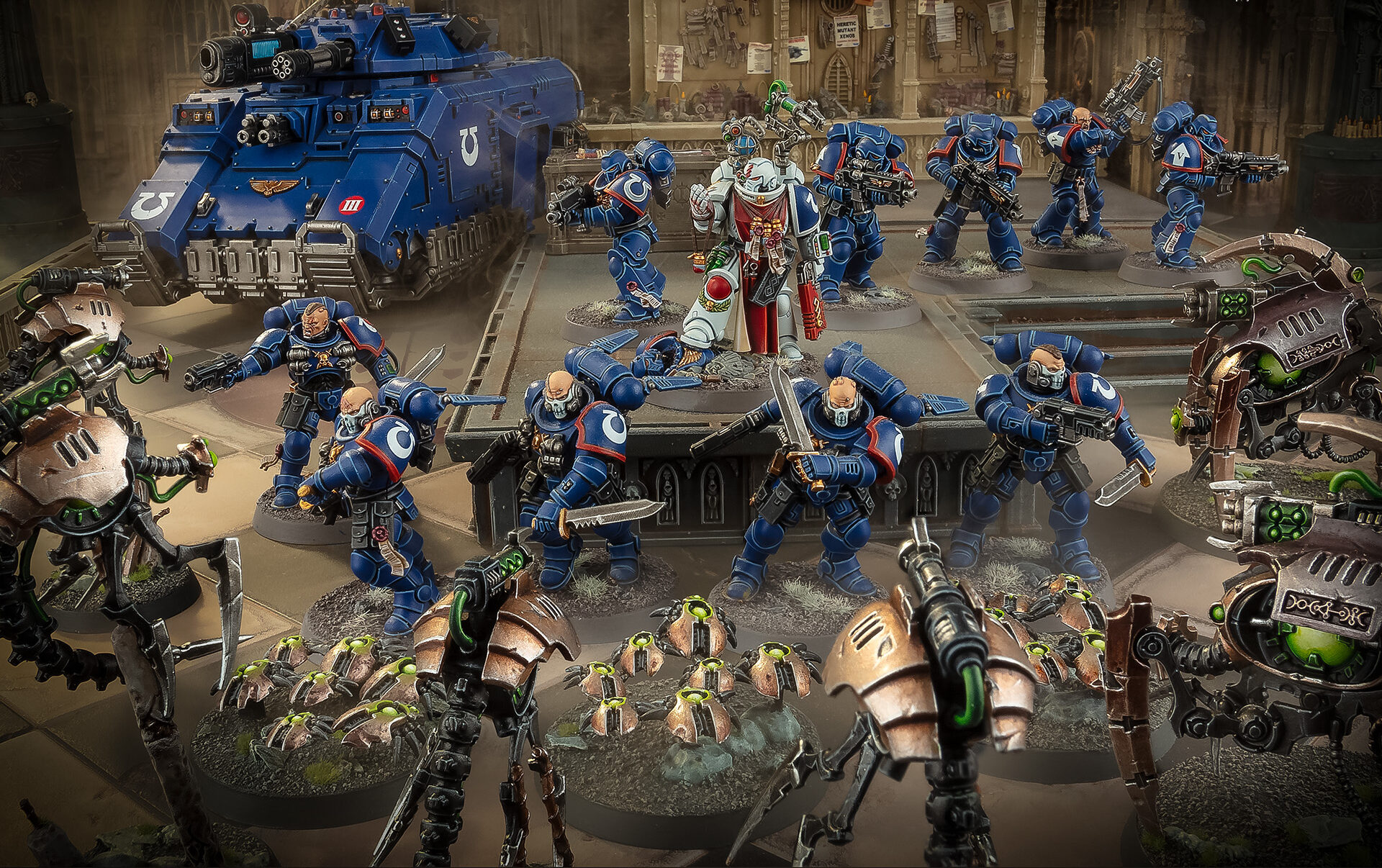
Wargaming miniatures giant Games Workshop has banned the use of AI in its design processes, with CEO Kevin Rountree saying the £6bn business was strongly committed to protecting its IP and respecting its human creators.
The Warhammer maker unveiled the policy as it announced record half-yearly results, with core revenue in the 26 weeks ending November 30 rising more than 17% to reach £316.1m.
Rountree said in the report that the company had agreed a “very cautious” internal policy to guide it on use of AI, which he described as a “very broad topic” that he admitted he was “not an expert on”.
He said, “We do have a few senior managers that are: none are that excited about it yet… we do not allow AI generated content or AI to be used in our design processes or its unauthorised use outside of GW including in any of our competitions.”
Rountree added, “We are allowing those few senior managers to continue to be inquisitive about the technology. We have also agreed we will be maintaining a strong commitment to protect our intellectual property and respect our human creators.
“In the period reported, we continued to invest in our Warhammer Studio – hiring more creatives in multiple disciplines from concepting and art to writing and sculpting. Talented and passionate individuals that make Warhammer the rich, evocative IP that our hobbyists and we all love.”
The decision by the miniatures gaming heavyweight is notable given the ongoing emergence of board games relying on AI-generated imagery – despite widespread criticism of the technology’s environmental impact and its reliance on using copyrighted works as training data without the permission of their creators.
Artists to have come out strongly against the technology include Root artist Kyle Ferrin, who described AI “slop” being trained on copyrighted art as theft and told BoardGameWire that publishers choosing to use it were “devaluing all of board games as an industry”.
The first high-profile rejection of the technology in the board game space came in September 2023, when tabletop publishers, artists and players took to social media and BoardGameGeek forums to condemn Stronghold Games using AI art in the development of the latest Terraforming Mars Kickstarter campaign.
That campaign still saw Stronghold raise more than $2.2m from over 19,000 backers, however, and online pushback against tabletop projects using the technology are frequently met with counter-resistance from pro-AI supporters.
Fellow board game publisher Awaken Realms collected $3.8m for Grimcoven, which includes AI generated images, via a Gamefound campaign the following year, and games such as the $1.2m Wonders of the First CCG and Wise Wizard Games’ Draconis 8 have actively leaned in to the use of AI artwork as a selling point.
While many smaller board game publishers and creators have been vocal online about steering clear of AI-generated imagery, large board game publishers to actively come out against AI artwork in a meaningful way have been few and far between.
The highest profile of those so far has been Wingspan and Scythe publisher Stonemaier Games, with co-founder Jamey Stegmaier telling BoardGameWire in April 2024 that his company wants “nothing to do with it”.
A month prior to that Awaken Realms had to take down AI-generated promotional images for its Puerto Rico 1897 Special Edition crowdfunding campaign, after being contacted by the game’s licensor Ravensburger and reminded that generative AI “cannot be used in any part of the art process”.
And in the summer of that year Spiel Essen – the world’s biggest board game fair – stopped using AI generated images to market the event, citing criticism from industry professionals and consumers about the previous year’s campaign and ongoing uncertainties about the legality of the technology.
Last summer Asmodee CEO Thomas Koegler confirmed to BoardGameWire that the board game giant’s policy was not to use AI art in any of its own productions, a position he indicated would continue for the foreseeable future.
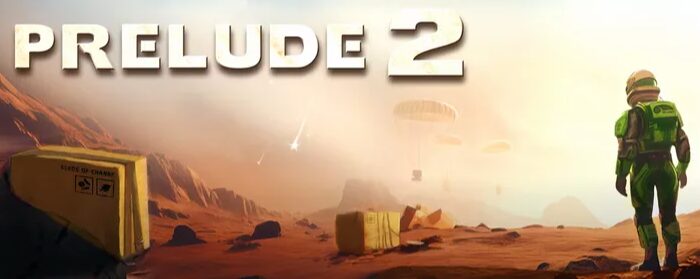
That policy has not prevented Asmodee from distributing games which make use of AI-generated imagery, however, including Path of Civilization and the Prelude 2 expansion for Terraforming Mars.
About two thirds of Asmodee’s net sales – which reached €1.36bn during the last financial year – come from the company distributing games from other publishers, while almost 70% of Asmodee’s 2,200-plus workforce are focused on distribution.
Games Workshop’s latest half-yearly results also revealed it had taken a £6m hit in its pre-tax profits due to US tariff policy, but added, “The impact on our gross margin has been more than offset by efficiencies, price rises of c.3.5% on our miniatures and books, more stable commodity prices and lower stock write offs.
“Our work is not done – this will remain a key area of focus.”
Rountree added that Games Workshop and the Warhammer hobby were in “great shape”, saying, “We have delivered profitable sales growth in all our core 23 countries and all our three channels.
“Sales growth was driven by the release every week of new miniatures across the whole breadth of our IP, another successful period for sales of existing products and exciting customer engagement focused on our IP and the multiple ways to engage in the Warhammer hobby.
“We also continue to expand our own stores geographically (slightly slower than we had planned but I’m sure we will catch up) and our dedicated export team delivered product range support to our distributors in our 58 export countries.
“All but a few continue to deliver like-for-like growth year after year.”