BoardGameWire is proud to be sponsored by:




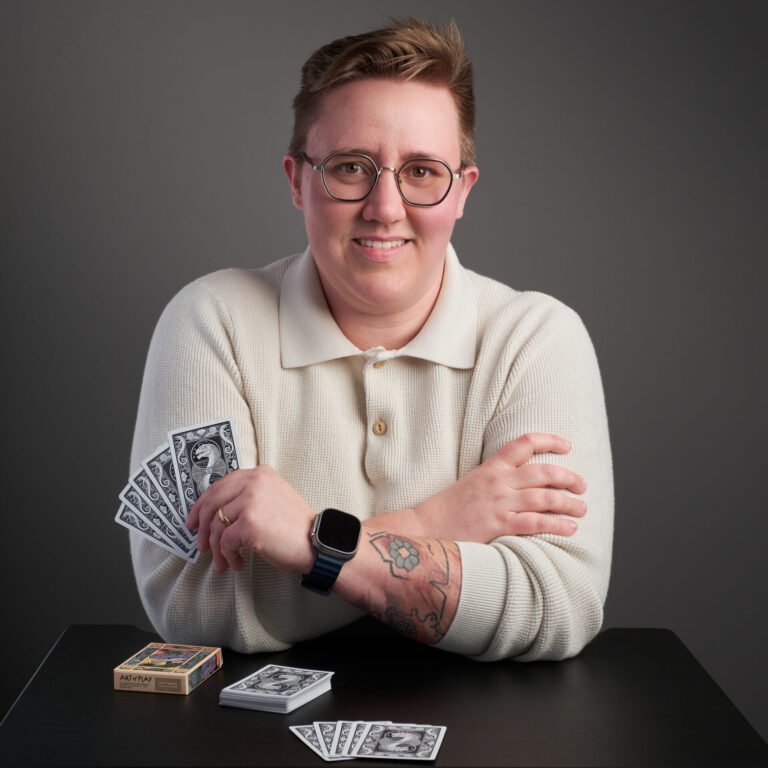
Few board game designers score the kind of rapid success that has come to Connie Vogelmann – with her debut design Apiary from 2023 flying high in the BoardGameGeek rankings, and follow-up creation Wyrmspan selling “far beyond the wildest dreams” of publisher Stonemaier Games’ founder Jamey Stegmaier following its high-profile release last year. That double success – and the “destruction” Donald Trump’s administration has had on her work as a grants law attorney – has seen Vogelmann decide to take the plunge into full-time board game design. She spoke to BoardGameWire about navigating freelance design, branching out beyond worker placement, and the challenges that face full-time designers in the current economic climate.
BoardGameWire: When did you realise that making the jump to full-time board game design might be something you could achieve?
Connie Vogelmann: I had been thinking about it for a while – I absolutely love game design – but it started to feel like an actual, practical, possibility after Wyrmspan came out. The royalty payments were high enough to make it feel like this could be a career (and not a hobby!). In the past year and a half since Wyrmspan’s release, I’ve been able to build up a queue of design and development projects, in the hopes of making the finances more sustainable.
So why now?
I didn’t want it to be now, to be perfectly honest. In January last year, my husband and I looked at our finances, and decided we’d re-evaluate in a year. Then perhaps we’d re-evaluate in another year, and so on, until we both felt more comfortable with me making the switch.
Then the onslaught of the Trump administration hit. I was an attorney for the US Federal government – where I’d been since I graduated from law school in 2014. I liked my job. My focus for the last several years has been grants law. Being able to help get funds out the door to people who need it is incredibly rewarding, so I was content with my job and the stability it provided. My coworkers were all lovely people too – intelligent, hard-working, dedicated, and caring.
That career path no longer exists. I cannot overstate the level of destruction that is currently going on behind the scenes; it is truly unprecedented. Day after day, we were told to destroy everything we have spent our careers building. Any slight objection results in termination for cause, which has a whole bunch of longer-term ramifications that are best avoided. “Hold the line” only gets you so far when those in power are utterly corrupt and have no regard for the law.
My mental health was suffering each and every day in the office, and it became abundantly clear that, at least over the next several years, I don’t have a place in the Federal government. So I chose to leave on my own terms.
You’d initially been considering full time design for some point in the future – what was your hoped-for timescale for that before this happened?
If I had to guess, two to three years. I was hoping to build up a bit more of a queue of projects before making the jump.
And will you be part or full time at a publisher, e.g. Stonemaier, or do you plan on freelancing?
I’ll be freelancing! I love design – both my own projects, and also designing to spec from publishers; there’s something very satisfying about being able to problem solve to a particular set of design constraints. I’m also taking on development work and rulebook editing as well; these are both areas that play to my strengths. Turns out that being an attorney for a decade really helps with technical writing.
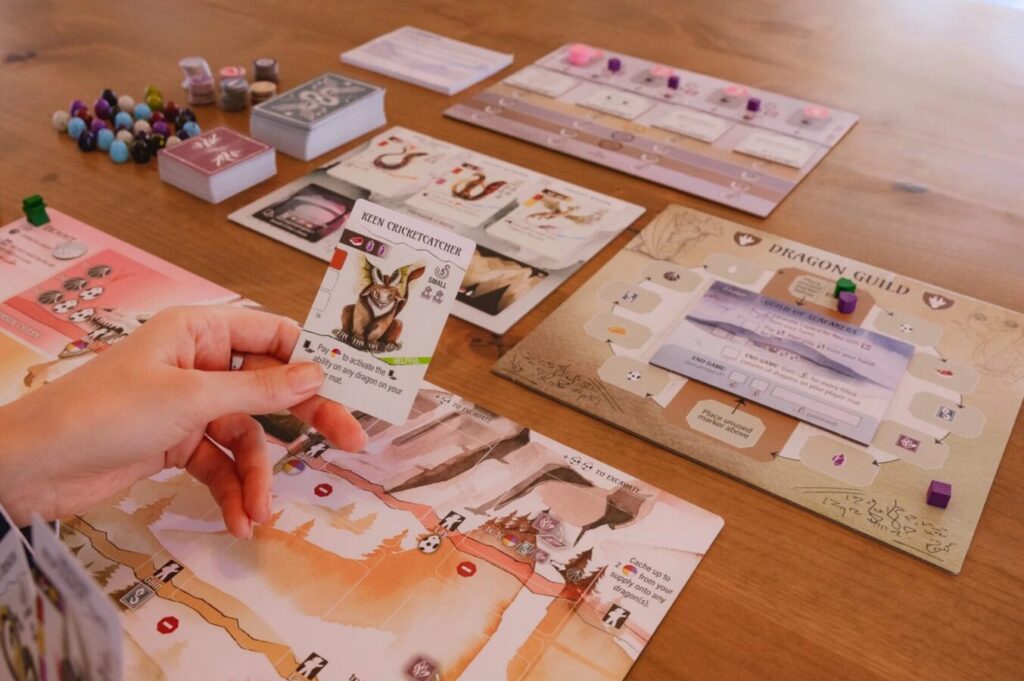
Where are you at in terms of, for example, existing designs with publishers, new designs ready to pitch, and other ideas on the drawing board?
Absolutely! I have three games under contract right now (plus the Wyrmspan expansion!), and several more in the pipeline in various stages of development. I’m hoping that by focusing on games full-time, I’ll be able to start moving some of my ideas forward a more quickly, instead of being relegated to the “notes” app on my phone.
If you’re happy to talk finances a little, how have your board game earnings been to date, and how do you anticipate making it work going forward (in terms of e.g. number of designs released per year, designing different styles of games, etc).
In 2024, I made more money from game design than from my day job, and 2025 was on track to be the same (though by a much closer margin). This is primarily from Wyrmspan, though some smaller royalties from Apiary, some advances for signing new games, and freelancing work, have certainly helped. I was lucky enough to be able to save virtually all of my royalties over the past 18 months have created a really nice cushion for me, as I make this switch. I am very (very!) lucky.
I’m still trying to figure out the contours of what my salary structure will look like moving forward; my goal is to be consistently finding freelance work to supplement the ebbs and flows of game royalties, while continuing to move new games forward. I’d also like to work a bit more in the crossover hobby/mass market space. Not only are these games easier to iterate on, but the ceiling is much higher for them. Ideally, I’d like to alternate back-and-forth between heavier euro games & lighter family-weight and card games, and really expand my design chops!
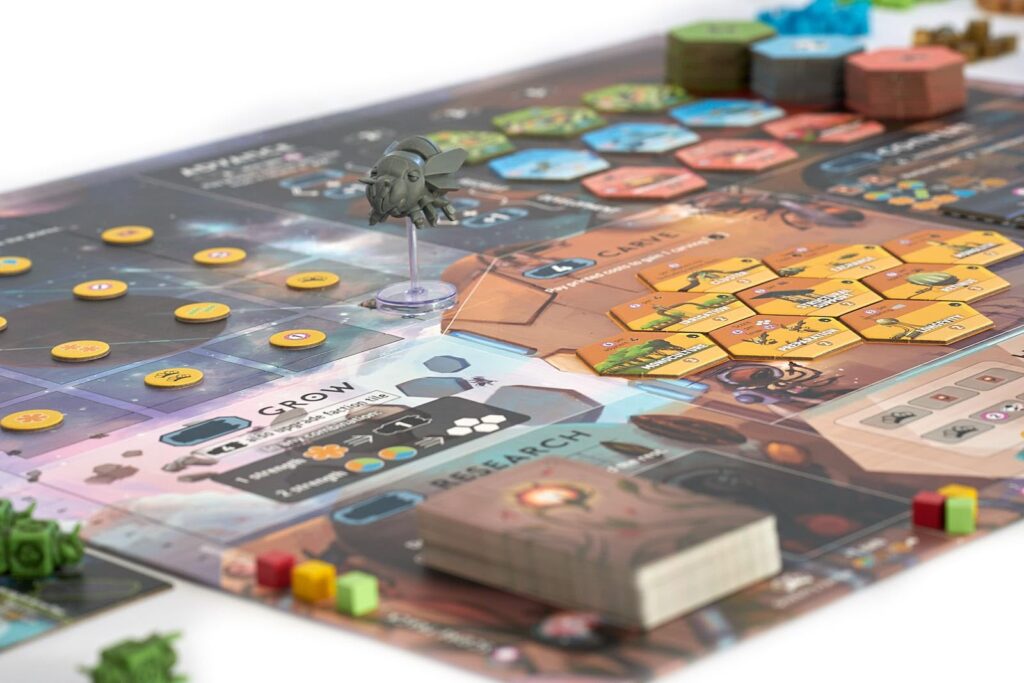
Your published games so far have been action selection / worker placement titles – do you plan to keep exploring those mechanisms, or will you be branching out in other directions for your next designs?
I’ll definitely be branching out! My games tend to be more focused on mechanisms than themes – but I’m open to designing all types of games. One day, I’d love to design a social deduction game, but there are so many great ideas on the market that it would have to be an amazing idea for me to put time into it.
What do you think are the big challenges around even a successful designer like yourself switching to full time, in the current climate?
Everything. In particular, I see three significant issues:
– Tariffs/economy. Nothing that is happening right now in the US is good for either the economy in general or the board game industry specifically. Unfortunately, working in a hobby industry means it’s one of the first things to go when finances get tight.
– Price points. In general, no one is making a huge amount of money in game design (despite all the talk of “cash grabs” on BGG). Because so many people are participating in this industry as a hobby, prices are generally depressed. Print runs for most euro games are small enough that even generous royalty percentages don’t really make ends meet.
– Ebbs and flows. This is going to be true of any creative industry, but it’s worth mentioning. Board game royalties can fluctuate wildly – it can easily be several years between when a game is signed and when it comes to market. I’ve been very lucky to work with Stonemaier, where royalties are paid monthly (and are very generous). Unfortunately, this the exception rather than the rule. In a lot of cases, royalty payments can be pretty unpredictable, and depending on the publisher, are often paid quarterly (or even less frequently than that!).
What are your big hopes as a full time designer across 2025, and for next year? Where do you see yourself, ideally, at the end of 2026?
I’m hoping to continue to build up my queue of projects, both on the design and development side. I’m hoping to build up relationships with more publishers, so that I have a steady stream of development work coming in – which will in turn make pitching easier, when the time and project is right. I’m hoping that by PaxU, I’ll have at least one or two new games in pitchable state.
By the end of 2026, I’m hoping to have at least one more game released, and a couple more games signed!
And have you had any advice from other designers, perhaps who are/were already full time, about how to approach it?
I’ve been fortunate enough to discuss this with both Elizabeth Hargrave and Dominic Crapuchettes. My main takeaways are largely to keep the foot on the gas, and don’t get complacent!