BoardGameWire is proud to be sponsored by:





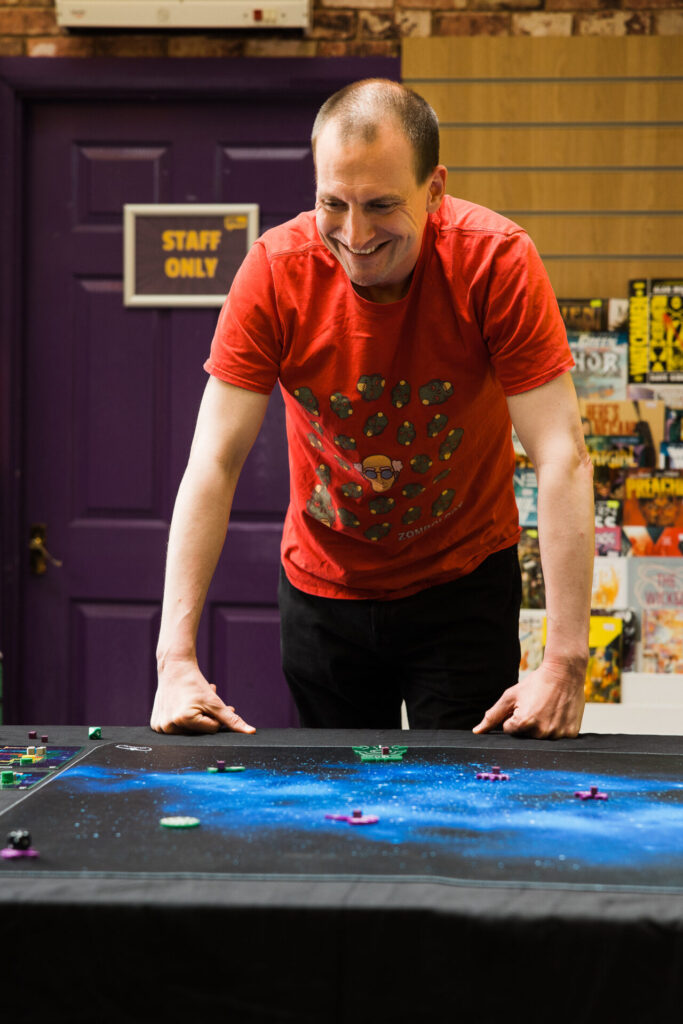
As board game publishers continue to grapple with volatile manufacturing costs, tariffs and freight disruption, UK-based Eurydice Games is celebrating reaching almost £400,000 in lifetime revenue without ever outsourcing production.
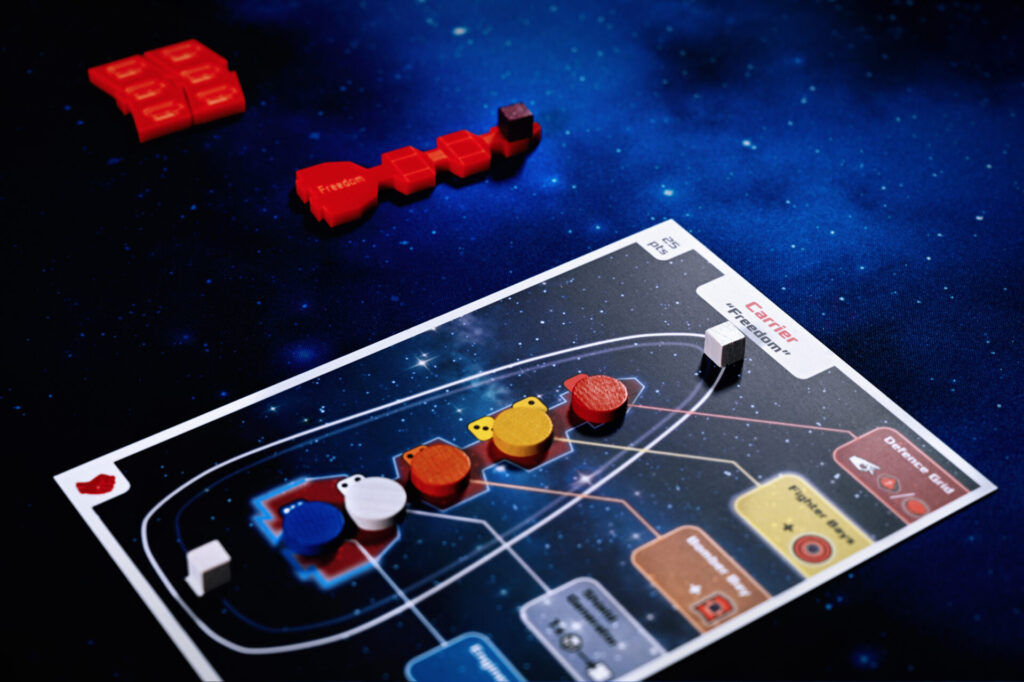
The Newcastle upon Tyne-based company has just completed its 7,000th box of FlickFleet, the dexterity-based tabletop space skirmish game it has manufactured entirely in-house since launching in 2018.
Every copy of the base game and its six expansions has been laser cut and assembled by Eurydice co-founder Paul Willcox in his garage in York, with the company estimating it has now produced well over 400,000 individual laser-cut components.
The unusual approach has allowed Eurydice to build a business that has generated almost £400,000 over eight years. Just under £250,000 has come through crowdfunding, with the remainder generated through direct website and convention sales.
While many indie game designers and small publishers view overseas manufacturing as an inevitable step in the process, Eurydice believes its experience demonstrates that remaining in-house can make commercial sense for certain types of games.
“When we ran our first campaign we had no idea how much money we’d raise, so we investigated doing a manufacturing run so we weren’t going to be caught out if it went wild,” Eurydice director Jackson Pope told BoardGameWire.
“As it was we 101% funded with four hours to spare at the end of the campaign, so stuck to laser-cutting as planned.
“…we would have needed well over £25k [to outsource manufacturing] in that first campaign, and obviously inflation means that number is much higher now.
Instead, narrowly crossing its target saw the team stick with its original plan of producing the game themselves – and that decision has shaped the business ever since.
Rather than treating each expansion as a standalone production run, Eurydice launches a new crowdfunding campaign each year, combining demand for the latest release with reprints of older products into a single manufacturing cycle.
Because production takes place in-house, the publisher says it can economically manufacture extremely small quantities of older products, with some reprints numbering as few as 100 copies.
The company believes that flexibility has enabled it to support a product line that would have been difficult to finance using conventional manufacturing methods.
“In an industry with a lot of indie companies, we are unusual in that we make the game ourselves, on a laser-cutter in Paul’s garage,” Pope said.
“… [rolling] up reprints of everything into a single large print run… has allowed us to reduce costs by placing one large order with each of our suppliers.
“As a result, we’ve been able to release a vast range of ship models, which would have required huge print runs and capital to fund through traditional injection moulding manufacturing.”
That manufacturing model has also had knock-on advantages for the company in fulfilling its games.
Instead of waiting for overseas production and freight, Eurydice says it often begins shipping rewards within months of a crowdfunding campaign ending, with complete fulfilment typically finished within a year.
But there are inevitable trade-offs, Pope added, with each copy of FlickFleet or one of its expansions taking Willcox hours to make – as well as having to be piled up in his home ahead of fulfillment.
The operation has also proven vulnerable to disruption, too, with the laser cutter purchased after the company’s first successful crowdfunding campaign catching fire in 2022 while Eurydice was fulfilling another project, forcing an emergency replacement before production could continue.
Even so, Pope believes recent geopolitical disruption has reinforced some of the advantages of keeping manufacturing close to home. But the model is not without commercial limitations, of course.
Despite considering a larger retail print run, Pope says the amount of labour required to manufacture each copy, coupled with international shipping costs from the UK, has made broad retail distribution difficult. Eurydice currently sells through crowdfunding, direct sales, conventions and just under a dozen UK retailers.
He also stressed that garage manufacturing is not a universal solution.
“It’s definitely an option, if you’re prepared to put in the work. And it is a lot of work,” he said.
“But it lets you do things that would be prohibitively expensive through traditional manufacturing and smaller runs of interesting ideas that would never sell tens of thousands of copies but should still see the light of day.
“If you’re confident you can sell thousands of copies, you’re definitely better using traditional manufacturing.”
Eurydice is planning to launch its seventh FlickFleet expansion, Box of Xeno Flicks 2, on Gamefound in October.