BoardGameWire is proud to be sponsored by:



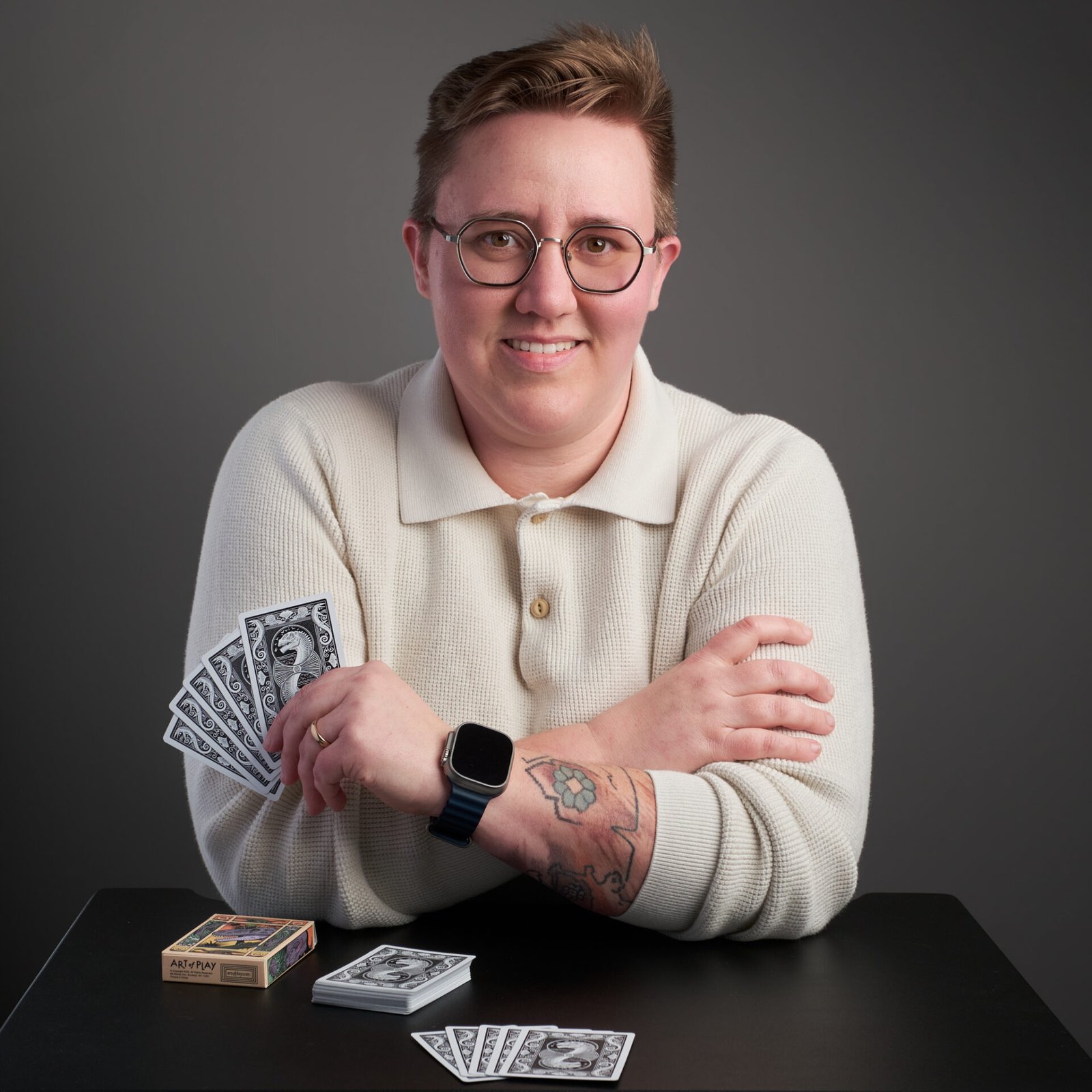

Chip Theory Games has hired eight-year Keymaster Games veteran Jennifer Graham-Macht to lead its lighter-games imprint Neon Knight, after discovering that building the business means developing a new audience – as well as rethinking some of the approaches behind its prior success.
The Too Many Bones publisher told BoardGameWire it is very happy with Neon Knight’s progress since it began building the studio two years ago, but has acknowledged being “maybe naive” about how many of its existing fans would follow it into lighter games.
Chip Theory chief marketing officer Josh Wielgus said, “We had hoped there would be a very high percentage of ‘omni-gamers’ in the Chip Theory audience who would gladly come along for the Neon Knight ride. That hasn’t been as true as we had initially hoped for, and thus we’re learning that we really need to put the effort into building that audience and brand.
“That has meant on the Chip Theory side investing more resources into the building of Neon Knight than we first anticipated. Obviously the biggest move we’ve made to that end is bringing in an experienced pro’s pro like Jen.”
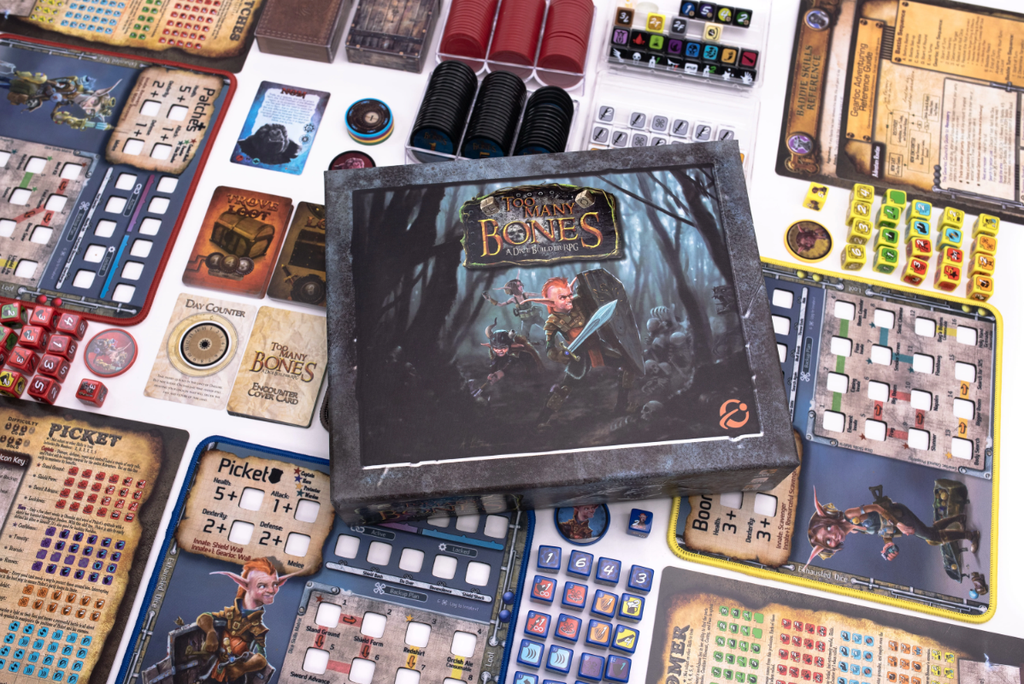
Chip Theory has spent more than a decade building a hugely successful business around expensive, lavishly produced games aimed at a devoted audience of heavier and solo-focused hobby gamers – with standout hits including Too Many Bones, Cloudspire and The Elder Scrolls: Betrayal of the Second Era.
But the publisher looked to expand the breadth of its offering in April 2024 by bringing in Dice Throne co-creator Manny Trembley’s recently-launched studio Good Knight Games, which it rebranded to Neon Knight.
That move was designed to give Chip Theory a dedicated route to more retail friendly and affordable lines of games, while drawing on its longstanding operations, customer support, fulfillment and marketing experience.
Wielgus told BoardGameWire, “We’re very happy with the direction things are going, even if thus far there hasn’t been a ‘megahit’ to speak of.
“We’re really proud of the titles that have been released thus far and are learning a ton about a market – the light/medium/mass market side of board games – that we have historically been absent from on the Chip Theory side.
“We fully understand that this basically needs to be treated as building a new business. Chip Theory proper didn’t really find its footing until after Too Many Bones released, which was almost five years into the company’s existence.”
But he said one assumption the company had got wrong with Neon Knight was expecting the tastes of Chip Theory’s staff – who enjoy games across a range of weights and genres – to be mirrored across its customer base.
“I think we were maybe naive about the number of traditional Chip Theory fans who would be excited about this direction,” he said.
“Chip Theory caters primarily to a heavy and solo-forward audience, but all of us here in the building love most types/genres/weights of games. We presumed that much of our audience was likely the same.
“That hasn’t turned out to be as true as we maybe hoped, and so it didn’t take long to realize we needed someone who didn’t have their mind in Chip Theory world at all to help us really reach what has turned out to be a very new audience.”
Theory Into Practice
New Neon Knight lead and managing director Jennifer Graham-Macht previously spent about eight years at Parks publisher Keymaster Games, initially as community manager before taking on roles in production, project management and ultimately being named Games Director.
She has also recently returned to board game retail as co-owner of New Jersey-based retailer The Player Agency, having previously run Satellite Comics and Games in the mid-2010s.
Graham-Macht told BoardGameWire that moving into full studio leadership felt like a natural next step after a long spell at Keymaster, and described Neon Knight as having “equal parts amazing pedigree and plenty of room to keep improving”.
Her new role sees her responsible for the “health and growth” of the studio as well as leading its operations, with Trembley remaining creative director with responsibility for game design and art direction.
She said, “I’ve spent the first couple of months getting clear with Manny what the vision is for the imprint. We first want to make that clear internally and then use it to start shaping how we grow our catalog and talk to our audience.
“In every aspect of studio work, I’m focused on making sure we are walking well before we run. That includes how we say yes to projects, how we work with external partners, developing a sustainable omni-channel strategy, and much more.”
Part of Graham-Macht’s role will be helping determine which lessons from Chip Theory’s existing business are useful for Neon Knight – and which do not fit a company targeting a different market.
Wielgus told BoardGameWire, “The lesson we’re learning is that not every lesson we’ve learned with Chip Theory is applicable on the Neon Knight side of the business.
“Jen’s here to really help us gauge what bits of our experience are helpful and what bits of our experience are perhaps holding us back from doing mass market well.
“Our penchant for ‘overproduction’, a laser focus on making games solo-friendly, and a crowdfunding-first mindset don’t necessarily benefit us here.
“Jen has been helping us shed those tendencies where we need to and really think about Neon Knight stuff as its own distinct creature with very distinctly different needs.”
He cited Fight 5, Neon Knight’s reimagining of classic card game War, as a prime example, saying, “We were very proud of our box for Fight 5. It’s sleek and sexy and we kind of modeled it after the Compile box (which is also sleek and sexy).

“Post-release, we learned that for the type of game Fight 5 is, we did a horrible job of making it a retail-friendly box. It doesn’t tell you what the game is at all and is far too abstract to sell itself.
“We’re also learning that the direct to consumer marketing we rely on so heavily for our big Chip Theory stuff isn’t a silver bullet for retail/distribution/mass market audience acquisition.
“While the games and the mechanics can be great (and we believe they are), you need to stop and consider a whole lot more things when you don’t have the luxury of literally speaking to your audience directly the way we can on our big Chip Theory crowdfunding campaigns.”
Future Plans
Graham-Macht said her experience at Keymaster had taught her about connecting with customers through different sales channels, adding that it was “exciting to apply that knowledge to a different vision”.
She added, “I think the biggest challenge for any new brand right now is discoverability. There is a lot of competition for how a person chooses to spend a weeknight hour with friends, family, a spouse.
“Most customers won’t know that Neon Knight is an imprint of another brand let alone what that brand stands for. The products themselves need to shine.
“And that being said, a premium experience can look and feel like a lot of things. More than component materials, I think thoughtful product design and attention in all the right places goes a long way to building customer trust and loyalty. That’s the mark we’re striving for.”
She added, “Any amount of that community engagement we can foster at Neon Knight will be a big win for the studio.”
Crowdfunding is another area where Chip Theory is reconsidering whether its established approach is the right one for Neon Knight.
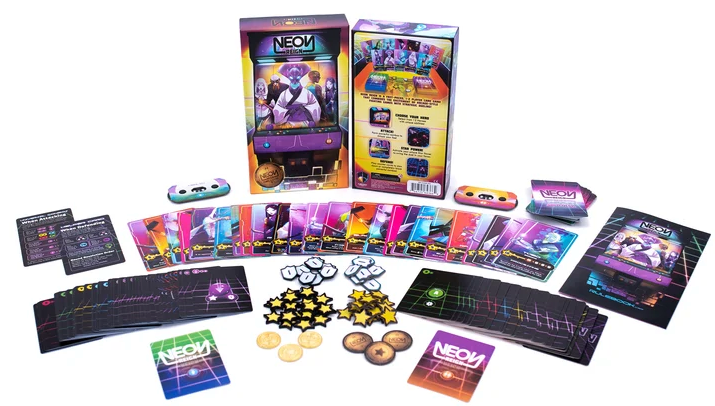
Wielgus said its debut Neon Knight title, Neon Reign, had launched with almost no pre-marketing, as the agreement to bring the studio into Chip Theory was signed just two days before its campaign.
He said, “That one I would chalk up as simply an experiment. Jump Masters I think we hoped would do a bit better than it did, but again so much of that I think is that we were relying on CTG’s existing Gamefound audience to show up for a lighter game that has no solo mode.
“As we look at the possibility of future campaigns, we’re having a lot of conversations about how to go about generating a unique audience and brand for Neon Knight, as well as things like moving Neon Knight campaigns back over to Kickstarter which seems to be a better fit for more accessible fare. “
Crowdfunding will not necessarily be the default route for future Neon Knight releases either, with Wielgus saying the company expects to use it occasionally, but will assess each game individually to decide whether a campaign is necessary or beneficial.
Graham-Macht added that while for now Neon Knight would rely on internally-developed designs, putting out games from other creators was “something we see in our future”.
“We’ve honed in that our games are inspired by/re-imagined modern classics, and that’s where we’re excited to explore”, she said. “Manny has a lot of ideas in this vein, but as we continue to grow and get our sea legs, there will be room for other designers’ work as well.”
Chip Theory is also hoping to staff up Neon Knight further following Graham-Macht’s hire, with the company gearing up to make two more hires that will split their time between the two arms of the business.
Wielgus told BoardGameWire he hopes the business will expand “in a huge way” across its release slate, staff numbers and amount of investment, but added that time – and sales – would tell if the business is able to achieve that.
He said, “I may be crazy, and I know a lot of folks consider Chip Theory one of the most successful board game companies of the last decade (I don’t have a way to measure that really, maybe they’re right. We certainly feel like we’ve been very successful!) – but I think Neon Knight can absolutely grow to match Chip Theory’s success.
“That can look a lot of different ways financially (sales quantity vs actual profits is always a bit of a moving target), but ultimately we’re excited enough about this brand that we really want to give it the full send.
“If Covid and tariffs have taught us anything, it’s that having a lot of irons in the fire and a strong diversification of our portfolio is the best way to shield ourselves from catastrophe.”