BoardGameWire is proud to be sponsored by:

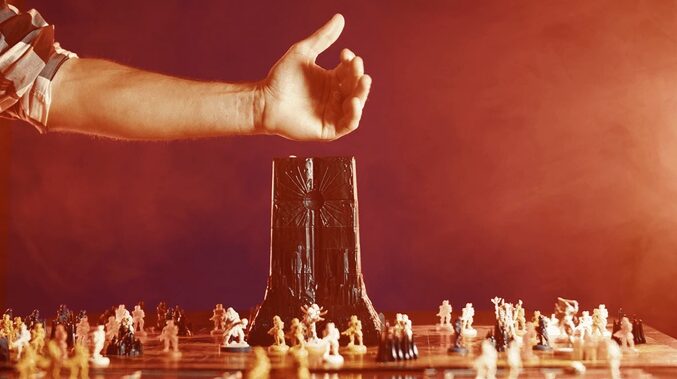

Plaid Hat Games launched its Kickstarter for The Monolith in June with a trio of successful crowdfunding campaigns under its belt – only to pull the project three days after launch when pledges unexpectedly ground to a halt, despite quickly beating its $20,000 goal. Less than two months later the revamped campaign is back, and has already pulled in almost four-times the amount the cancelled campaign managed in the same amount of time. In this first-person piece for BoardGameWire, Plaid Hat founder and CEO Colby Dauch explains why The Monolith exposed flaws the publisher’s previous campaigns had masked, what he believes it got wrong, and why the changes made for the relaunch appear to be working.
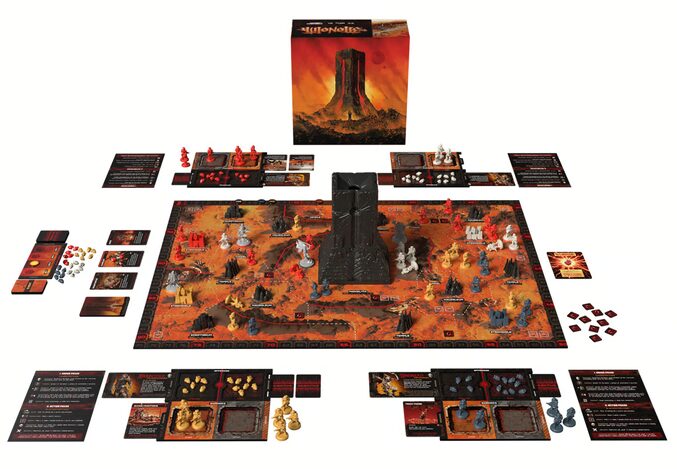
Plaid Hat Games is relatively new to crowdfunding and we’ve experience our first major setback in that arena. We launched our fourth ever crowdfunding campaign back in June, this time for a new game called The Monolith.
By the second day of the campaign the pledges had fully stalled out. It was self-evident that we had made mistakes, so we pulled the campaign with the intention to relaunch it after analyzing what had gone wrong, and doing what we could to address it.
As I write this article, I don’t know if our hunches will turn out to be correct. This article is scheduled to be posted as we relaunch the campaign, so I suppose we are all going to find out together! I’m more than a little nervous. Allow me to provide some background essential in understanding how we’ve come to make the choices we’ve made.
We’ve been around since 2009 and watched from the sidelines as crowdfunding took hold and grew into a large part of the board game industry.
For many years we swore off crowdfunding. Internally we were critical of it for a number of reasons. My biggest reservation was that it felt dishonest to me that an established company would tell its customers “we need your help to make this product”, when they had already proven previously that they were capable of putting together the funding necessary to launch a new product onto the market, without requiring the customer to buy said product a year or more in advance of its release.
However, things have changed over the years in more ways than one and honestly, it has been a bad business decision to hold out on the crowdfunding model for as long as I have.
When we did finally enter the crowdfunding space a couple of years ago I told myself, and others, that there was clearly no longer an expectation that the companies going to crowdfunding needed to be there. I believed it to be understood that it was more akin to a pre-order system and that the consumer knows that. I even said as much in the article I was interviewed for on this very site, posted on June 30th, about us pulling the Monolith from Kickstarter. It’s not true. I had only convinced myself that it was.
I’m in the midst of reflecting on every decision I’ve made that led to a failed campaign, and what that failure means for my company, the people I employ and my family, if I’m not able to correct course. The reality is that we moved to crowdfunding because the things that made us successful in the past aren’t working anymore and we were growing desperate for a solution.
Getting attention on a board game release announcement isn’t free anymore. It’s not news. At best it’s a bullet point on a long list of new release announcements for the week. The traditional method we’ve long employed of selling to distributors who sell to retailers who sell to players, sadly seems to be falling apart for us, and I suspect for most publishers.
So we found ourselves trying to incorporate crowdfunding into our business model while simultaneously telling ourselves we could do it different – better. Our approach:
There were flaws in this approach. Flaws that I believe were masked in our first three campaigns because they all had something else big going for them.
Wandering Galaxy was the latest installment in a series of games we had released that had gotten a lot of attention for their amazing storytelling and voice acting (in a companion app).
Ashes Ascendency was a reinvigoration for a game that has ten years worth of glowing reviews to put in front of people and a dedicated fanbase.
Super Auto Pets Card Battle was based on an amazing and charming digital game, and we were able to rely on the attention of fans from that.
The Monolith had no predecessor.
This is why I believe our attempts to do things ‘different from the others’ has come back to bite us:
We wanted to limit FOMO.
A crowdfunding campaign must be compelling beyond the presentation of the game itself. You are asking the customer to pay for a game long before they can expect to have it in their hands. We need to give them a compelling reason to do that.
In the Super Auto Pets Card Battle campaign, the most popular pledge was by far the ALL-IN pledge, because it was the most compelling. You got all of the sets, all of the add-ons and in a storage box that would organize it all and only be available during the campaign.
I took away the wrong lesson. What I decided was that what those results were telling me was just that people want all the stuff, so with The Monolith let’s just make the core product all of the stuff.
We wanted to reduce the wait time on the game.
This is the one where I really messed up with The Monolith. As I established, the reality is that we needed to make changes to how we were doing things and I allowed myself to miss out on a key advantage to crowdfunding: measuring demand.
In an effort to shorten the window on how quickly we could deliver on a campaign, and further spurred on by a yearning to have a line at our booth for a new game release at GenCon or Essen (that feeling is the highest of highs), I started having plastic molds for the game well before the campaign so that they wouldn’t delay production – and remember this game was going to have all the upgrades packed in, so it was a lot of plastics and a lot of mold costs.
Further compounding the issue was that the mold costs were so high, to get the cost per unit down, I felt like I needed to be prepared to produce 10,000 copies. And like the molds, I got that production started before the campaign even started.
It was the exact kind of risk we had always needed to take when producing a game, but crowdfunding should have given me a chance to mitigate that risk, and in doing so really been a fulfillment of the core concept of crowdfunding to begin with: Asking the player to help be a part of bringing the game to the market.
So here is what we are doing differently with the relaunch of The Monolith campaign to try to address what went wrong with the initial campaign:
Finally, here are my take aways for how we will do campaigns differently in the future:
Follow Up
As I write THIS bit, the campaign has relaunched about 24 hours ago and is doing much better this time! By a large margin, backers are opting for the pledge level that includes all the add-ons. So I believe this supports the theory that the add-ons were essential for a successful campaign.
It is hard to quantify exactly how much each of our changes contributed to the better result, but overall, the adjustments seem to be working. I’m so grateful to everyone who has backed.
The Kickstarter for The Monolith, which is designed by Phil Gross, is set to run until September 17.