
BoardGameWire is proud to be sponsored by:





Financially-troubled board game publisher CMON has secured a $19m injection of new capital as it battles to turn around years of heavy losses and dwindling cash reserves – which had left it with just $368,000 in bank and cash balances at the start of August.
The huge investment from new shareholders gives the crowdfunded board game giant much-needed financial breathing room, as it continues its attempt to recover from losses of almost $23m across 2024 and 2025.
CMON warned in the summer that its core business was suffering a “prolonged structural downturn” and was still consuming more cash than it generates, despite a drastic restructuring which has seen the company halve its workforce, sell off some of its biggest game IPs and halt new crowdfunding campaigns.
Those efforts dramatically reduced its losses, with the company reporting a loss of just over $2m for the first half of this year, compared to almost $7m for the same period in 2025.
But CMON’s balance sheet remained under pressure at the end of June, with $7.34m more in short-term liabilities than short-term assets, up from $6.89m at the end of 2025.
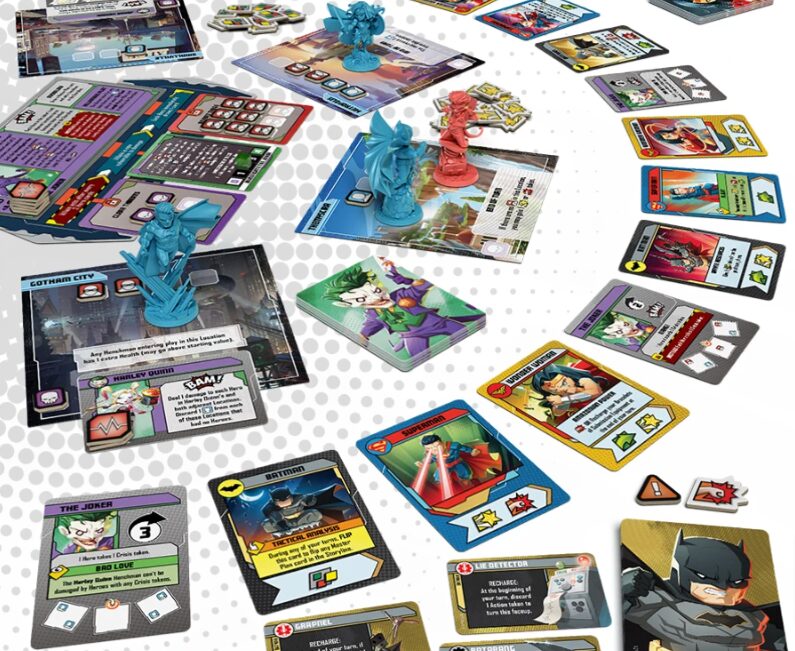
A significant part of CMON’s liabilities relates to eight crowdfunded games whose campaigns raised $14m from backers, but which the company has yet to deliver – including DC Super Heroes United, which raised more than $4.4m, and DCeased, which brought in over $2.5m.
CMON’s directors in its H1 report that the liabilities position had caused the company’s directors to give “careful consideration to the future liquidity and performance of the group and its available sources of financing in assessing whether the group will have sufficient financial resources to continue as a going concern”.
The directors added that they believed CMON would be be able to continue operating – but central to that assessment was the success of the planned share sale, which was designed to raise up to HK$150.5m, or about $19m.
Existing shareholders agreed to buy just 7.76% of the new shares offered to them by the August deadline, leaving CMON looking to raise more than $17.5m from other investors through the rights issue – a figure approaching 2.5-times the valuation of the entire company implied by its last share sale in February this year.
But the company has now revealed that placing agent Yuen Meta managed to sell every remaining share on offer, giving the business the full $19m it had been seeking – a significant mark of belief in the beleagured business.
That capital injection is more than 50-times CMON cash balance from early August, and almost double the $9.9m in revenue CMON generated across the whole of last year, although it pales in comparison to the $37m to $45m revenues it posted each year between 2021 and 2024.
CMON said it plans to use 40% of the newly-raised money to fund its day-to-day operations across the next 12 months, including staff costs, royalties, shipping and distribution, professional fees and other administrative and operating expenses.
Of that slice, about 30% – which works out to $2.28m – was set to go towards staff costs including salaries, bonuses and allowances, 30% towards selling and distribution expenses, and 35% towards general administrative and operating expenses, including its sales operation, utilities, insurance, government registration and filing fees, listing fee, repairs and maintenance. The the final 5% was earmarked for paying professional fees
That news could provide some relief to the tens of thousands of backers still waiting for their games via CMON’s heavily-delayed crowdfunding campaigns – although the publisher has not specified exactly how much of the capital will be used to deliver the overdue titles, or whether the capital is enough to ensure all eight will be fulfilled.

CMON has not completed fulfillment of a crowdfunding project since Zombicide: White Death in mid-2025, but did manage to deliver pre-orders for Cthulhu: Dark Providence, Marvel United: Witching Hour and Dune: Desert War in the first half of this year.
Four other pre-order titles: Assassin’s Creed Role Playing Game, The Adventurers, The Dead Keep and Super Fantasy Brawl Reborn, all remain undelivered, although the first of those is currently slated for completion in Q3.
| Game | Amount raised | Number of backers | Fundraise completed | Initial delivery estimate | Latest delivery estimate (as of September 24, 2026) |
|---|---|---|---|---|---|
| Mordred | $669,976 | 5,687 | July 2023 | August 2024 | Q4 2026 |
| Masters of the Universe: The Board Game – Clash for Eternia | $719,664 | 4,182 | January 2024 | November 2024 | Q1 2027 |
| DCeased | $2,564,789 | 12,787 | December 2023 | April 2025 | Q1 2027 |
| DC Super Heroes United | $4,478,989 | 14,040 | August 2024 | August 2025 | Q1 2027 |
| God of War | $832,945 | 4,388 | May 2024 | June 2025 | Q2 2027 |
| Massive Darkness: Dungeons of Shadowreach | $2,854,553 | 9,842 | February 2025 | March 2026 | Q3 2027 |
| A Song of Ice & Fire: Tactics | $1,886,509 | 6,406 | February 2024 | February 2025 | Q3 2027 |
| Degenesis: Clan Wars | $339,742 | 1,232 | June 2024 | July 2025 | n/a |
| Total Dollars | $14,347,167 |
About 20% of CMON’s newly-raised capital is earmarked for repaying debts and other outstanding liabilities, including $2.46m owed to a CMON director and $385,000 of unsecured advances from employees, as well as outstanding production, shipping, royalty and other operating costs.
CMON has slated 25% of the new money for expansion in existing and new markets, including strengthening the company’s presence in Europe through marketing and potential attendance at events including Spiel Essen and Cannes, as well as targeting growth in Japan and the Philippines.
The company added that it plans to put 15% of the new capital towards potential acquisitions as part of a push into digital gaming, although said it had not yet identified any targets.
CMON said it intends to look for between one and three businesses, primarily in Asia-Pacific, valued at between about $1.3m and $2.5m each, which could help it develop digital adaptations of its existing games, companion apps and other digitally-enabled features.
The publisher stressed that it intends to retain physical tabletop games as its core business, with the digital push designed to complement rather than replace them.
CMON’s capital raise has also radically reshaped the ownership of the company, with chairman and CEO Ng Chern Ann ceasing to be the largest shareholder after his overall stake was diluted down from about 20% to just over 5%.
The capital raise has made investor Yip Ka Ki Cherry CMON’s largest disclosed shareholder with a roughly 19% stake, personally and via her investment holding company Legend One.
Yip was already an investor in CMON before the rights issue, with a stake of about 4.8%. Her other previous investments through Legend One include Japanese entertainment business TryHard Holdings.
CMON has also strengthened its board following the capital raise, appointing two new independent non-executive directors – veteran financial management, corporate governance and audit executive Chan Ka Kit, and corporate communications, marketing and investor relations specialist Claire Luk.

Who in their right mind, would put their cash into this sinking ship? If they fulfill all their crowding funding games before folding, i will be stunned. There’s zero chance they ever get a penny from me, for anything, ever again.