BoardGameWire is proud to be sponsored by:



Games aimed at adult players were a major driver of growth in Germany’s sizeable tabletop market this year, with sales surging more than 20% in the first nine months despite the country’s ongoing economic difficulties.
The rise helped Germany’s combined games and puzzles market grow 8% over the period, compared with 3% across the wider toy industry, according to figures from market research company Circana released by German board game publishers’ association Spieleverlage.
That result continues strong growth in the German board games market, which previously rose 22% between January and mid-September 2025. That was driven heavily by collectable card games such as Magic: The Gathering and Pokémon – although even excluding collectables, the games segment grew by more than 6%.
German board game publishers are also becoming more optimistic, with 90% of companies surveyed by Spieleverlage expecting their revenues to remain stable or grow this year.
More than four-fifths of respondents predicted stable or growing sales across the wider board game, card game and puzzle market, while 86% expected Christmas trading to match or exceed last year’s performance.
Circana representative Joachim Stempfle said games and puzzles had been among the toy industry’s leading revenue growth drivers this year, with the category it calls ‘adult games’ recording growth of more than 20% during the first three quarters.
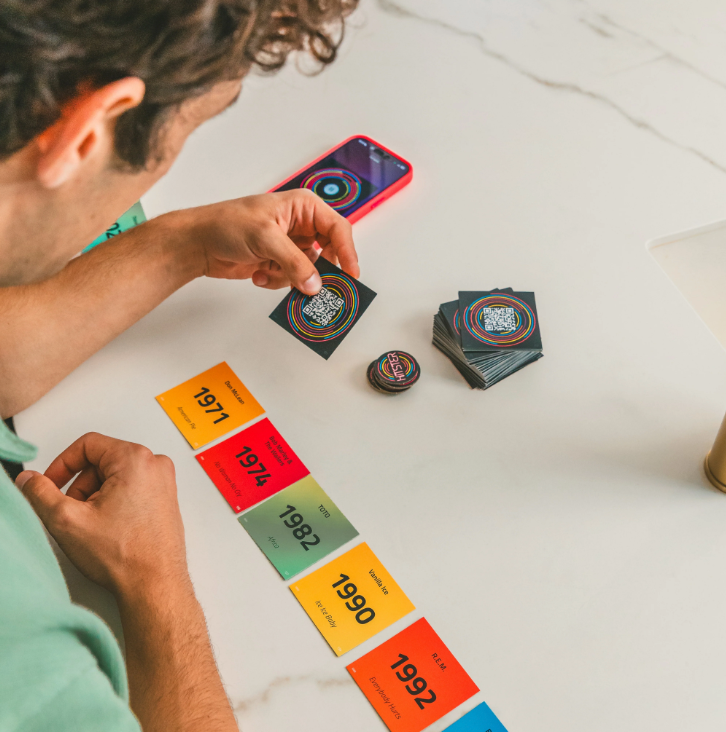
That was helped by the popularity of an unnamed music-based party game – likely Marcus Carleson’s Hitster, published by Jumbo, which had sold more than one million copies in Germany alone by the beginning of 2025. Jumbo recorded 87% growth in Germany last year, with the company identifying Hitster as a major contributor.
The growth in games aimed at adult players follows a sharp rise in sales of adult-oriented party and knowledge games in 2024, when Spieleverlage reported growth of more than 50% in those categories.
Spieleverlage chairman Hermann Hutter said, “With the pandemic six years ago, our industry experienced an unprecedented surge in popularity, which could not continue at that pace.
“However, developments over the past two years show that the trend toward games remains unbroken and that the industry has succeeded in appealing to new target groups.
“The trend could be stronger if the economic conditions in Germany were better and consumers had more money in their wallets for leisure activities at the end of the day.”
Germany’s economy has struggled with sluggish growth in recent years, weighed down by high energy costs, weak industrial activity and subdued consumer spending.
Households have faced pressure on their disposable incomes following several years of inflation, while businesses have complained of high operating costs, excessive bureaucracy and slow progress on economic reforms.
Some 69% of surveyed publishers said the so-called ‘kidult’ market was important or very important to the industry’s future, with card games identified as an important growth driver by 48% of respondents, followed by family and adult games at 38% and party games at 33%.
Separate research from Germany’s Stiftung für Zukunftsfragen also suggests the popularity of tabletop gaming has remained well above pre-pandemic levels.
Its 2026 Freizeitmonitor study found that the proportion of people regularly playing board and card games each week had risen from between 6% and 8% in the mid-2010s, to around 13% to 14% since 2020.
Publisher Pressure
Despite the positive sales figures and improving confidence, German publishers remain heavily critical of the country’s economic and regulatory environment.
Spieleverlage’s survey found that 94% of respondents believed reforms introduced so far were insufficient to support sustained economic growth, while 62% identified bureaucracy and regulation as major challenges. Weak consumer confidence was cited by 57% of companies.
Publishers are facing high energy costs, taxation and increasing compliance requirements, with Spieleverlage singling out the EU’s Packaging and Packaging Waste Regulation as a source of costs and bureaucracy.
Those concerns have not stopped companies investing in expansion, however, with 50% of surveyed publishers putting money into international growth and 44% investing in new games.
More than 60% of publishers identified specialist bricks-and-mortar retailers as important places for consumers to discover and try games, while the association pointed to the potential for a major book retailer to increase the visibility of tabletop products through its physical stores.
That comes despite Spieleverlage’s survey last year revealing a significant shift towards online sales, with six out of ten publishers reporting an increase in internet purchases and almost half experiencing falling sales through physical retailers.
Spiel Essen also remained an important part of publishers’ commercial plans, with 78% of respondents attaching high or very high importance to the convention for their year-end sales and as an opportunity to test new games.
This year’s event attracted a record 230,000 visitors across a sold-out four days – although its ability to squeeze in larger and larger crowds has now reached its limit, Merz Verlag managing director Carol Rapp told BoardGameWire at the show.