BoardGameWire is proud to be sponsored by:



Pandasaurus Games has heavily downsized its Spiel Essen booth this year, after finding it can still sell similar numbers of its hit games through Asmodee arm EPN while slashing its overheads and logistical workload.
The US publisher has shifted to using European Player Network, Asmodee‘s specialist English-language sales and distribution operation in the region, to handle its stock and sales at the giant German show – removing the need for Pandasaurus to transport and store hundreds of games, staff its own retail operation and devote much of its booth to selling them.
Pandasaurus had run substantial booths at Spiel – the world’s biggest board game fair – for several years following the Covid-19 pandemic, but told BoardGameWire its experience using EPN last year persuaded it to heavily scale back its own footprint for the 2026 show in October.
CEO Nathan McNair said Pandasaurus previously spent more than €50,000 ($57,000) attending Spiel with its larger setup, compared to between $20,000 and $25,000 under its current model.
He said games Pandasaurus expects to be hits still sell similar numbers of copies – typically 300 to 500 – under the new setup – although added that Pandasaurus now receives roughly half as much revenue per sale.
“The revenue is lower because obviously EPN will get a portion of the proceeds, but our cost is so much lower that the overall cost to revenue ratio is very similar,” McNair said.
This year EPN will handle the company’s stock and sales operation and host three Pandasaurus demo tables within its booth, while the publisher’s own, smaller stand will be focused largely on meeting space and additional demos of upcoming games.
Titles being shown off by Pandasaurus this year include Alex Cutler design Sandcastles, Machi Koro: Life from Masao Suganuma and embroidery-focused card game Fadenfroh from Jordy Adan and Alexander Pfister.
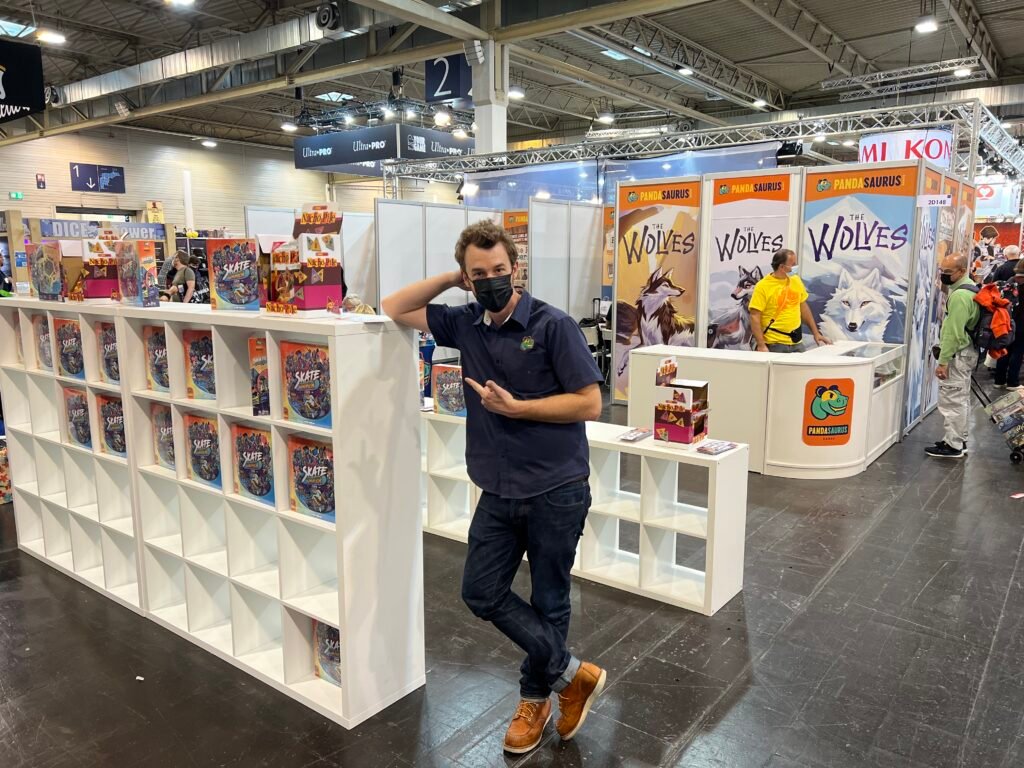
McNair said, “The show is very expensive to get to and logistically trying to run a large booth half a world away is a lot. Running a show like GenCon is already a lot – but finding booth staff for the show when we need to staff 20 or more demo tables, stock games, sell games, figure out how to legally import/pay VAT/collect cash/deposit the cash in the US bank or get a correct license to take credit cards in Europe is a logistical nightmare.
“So, what we found is a way to more economically attend the show, get some marketing done, sell games to players, make sure we are demoing games and getting the meetings we need without having to spend €50,000 or more on the show itself.
“Our cost to attend with this model is roughly 1/3rd as much overhead, and while we make less per order when a game is sold our sales are actually just as strong, so players are still getting the games they want – we come close enough to ‘breaking even’ and it’s just a lot less work for us.”
McNair said US publishers “typically have a smaller footprint in continental Europe than we like to think”, and questioned the need for some English-language publishers to operate such large stands at Spiel.
“A lot of us run booths but I find it a bit strange given our limited sales in the region that so many have large booths,” he said.
“Some of course do sell and distribute in German (or other languages) themselves so that makes more sense – but for English only US publishers continental Europe isn’t our core market.
“If you look at US trade shows for the most part the only European companies with booths tend to be those that sell themselves in the US.”
He added, “I don’t want to tell other folks how to run their business and I’m a big believer that the folks with larger booths probably know more about their situation than me – so they may have found that this is really effective for them.
“I would absolutely prefer this model – it’s just a lot less work – besides the money difference I mentioned has taken the workload of prep and running the show to a fraction of what it was to try and run a larger booth in Germany.”
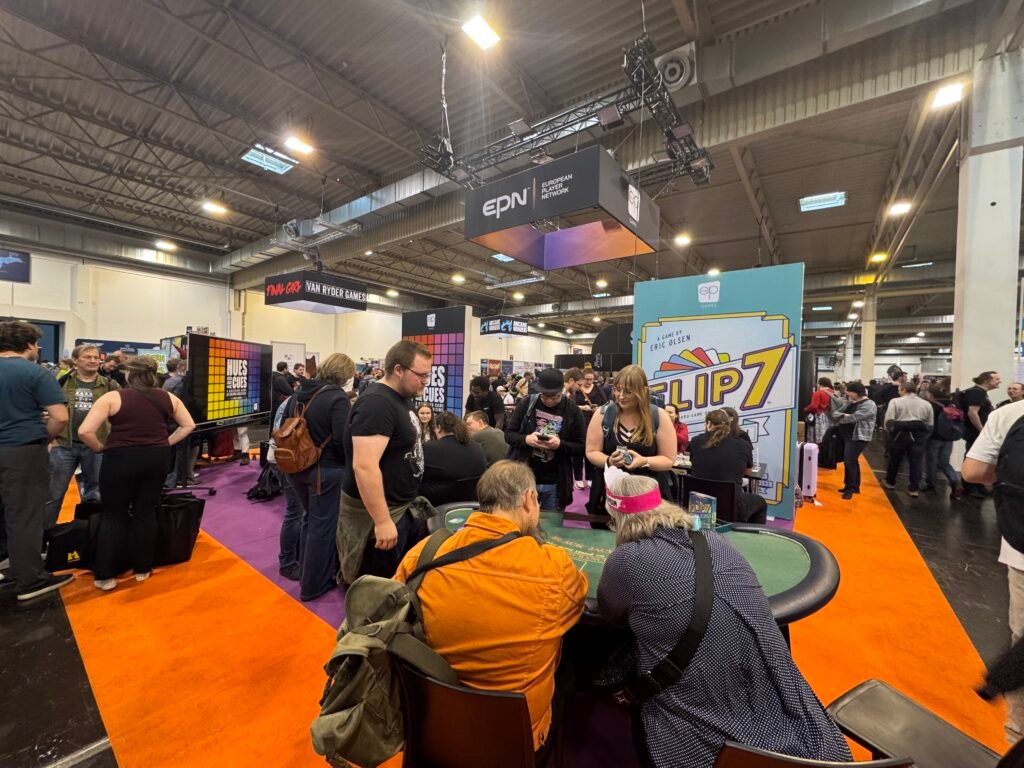
Pandasaurus’ decision to cut back on the size of its booth comes as Spiel itself continues to move in the opposite direction – with an expansion into all eight main halls at the Messe Essen exhibition centre for the first time expected to see the event challenge its record 220,000 attendance set last year.
Spiel said earlier this year that it had reached the reached the limits of its expansion at its long-time home after boosting floor space to 81,200 sq m – larger than 15 American football fields – amid what it called “overwhelming interest” from exhibitors.
Merz Verlag said demand for the additional space was coming both from existing exhibitors wanting significantly larger stands and an unusually high number of first-time exhibitors, with all available stands booked before the April 30 registration deadline.
And Pandasaurus’ smaller presence does not mean it sees less value in attending, according to McNair.
He said, “For me I really like to focus on meetings, seeing friends, trying to check out some games and building awareness of the new titles at the show – and I think the setup we have works really well for just that at a much lower lift,” he said.
“Essen is a much more international show in a lot of ways than most other board game conventions, so we know there are fans there who want to check out our new games really badly and I want to make sure they can – but if I can do it in a way that is less work and less risk for us I prefer that strongly.”
Spiel Essen 2026 takes place at Messe Essen from October 22 to 25.