BoardGameWire is proud to be sponsored by:


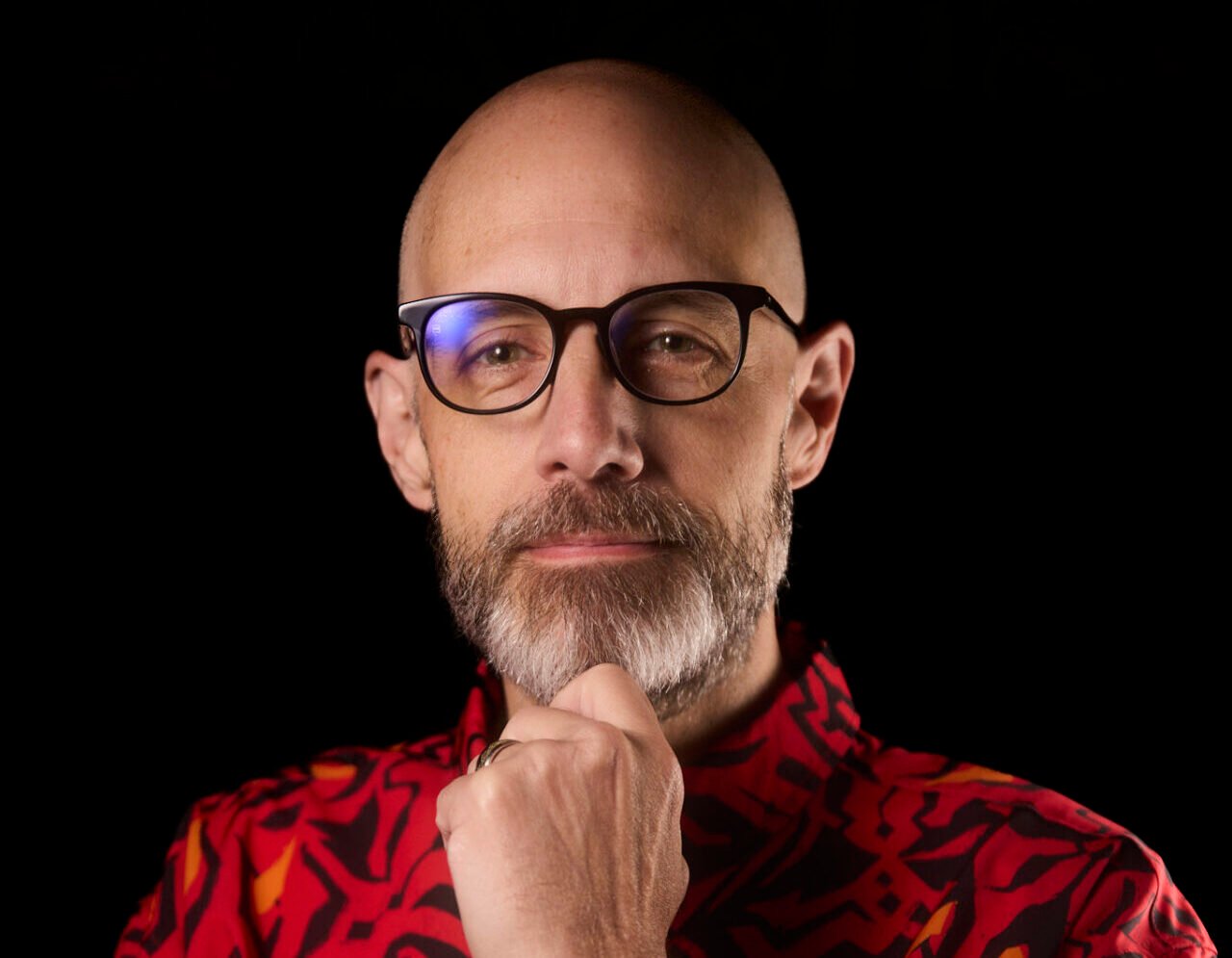

Few people in the hobby game industry have seen as many sides of the business as Scott Morris – from leading global strategy at Lucky Duck Games, building publishing partnerships at GTS Distribution and running sales, marketing and social media at Arcane Wonders. Now Morris is applying that experience to his own venture as founder of Steelwing Games, whose debut title Rainbow Blvd. has been nearly a decade in the making. He spoke to BoardGameWire about deciding to launch as a publisher in a challenging market, why he believes a slower, more selective approach is the right fit, and the lessons he is bringing from his career at Lucky Duck Games and beyond.
BoardGameWire: How long has the idea of you launching your own publisher been rolling around your head? I think I remember you saying you registered Steelwing some years ago?
Steelwing originally began to take shape in 2016, after first playtesting Rainbow Blvd. (which was then called Leprechauntractors as a play on words with Leprechauns and Contractors). Like a lot of people who work in games, I’ve always had ideas about the kinds of projects I’d love to help bring to life if the timing, team, and titles were right.
The company itself was set up in 2021, and I’ve been very intentional about not rushing into publishing just for the sake of launching something. For me, it was important that Steelwing start with the right game, the right creative partners, and a clear sense of what we wanted the company to stand for.
What was it that finally got you to make the jump and launch?
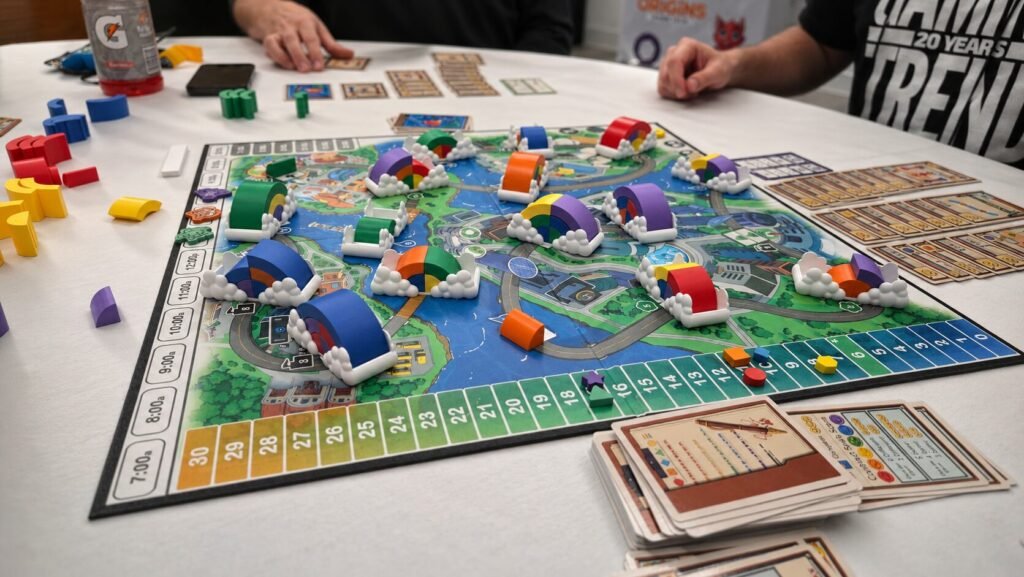
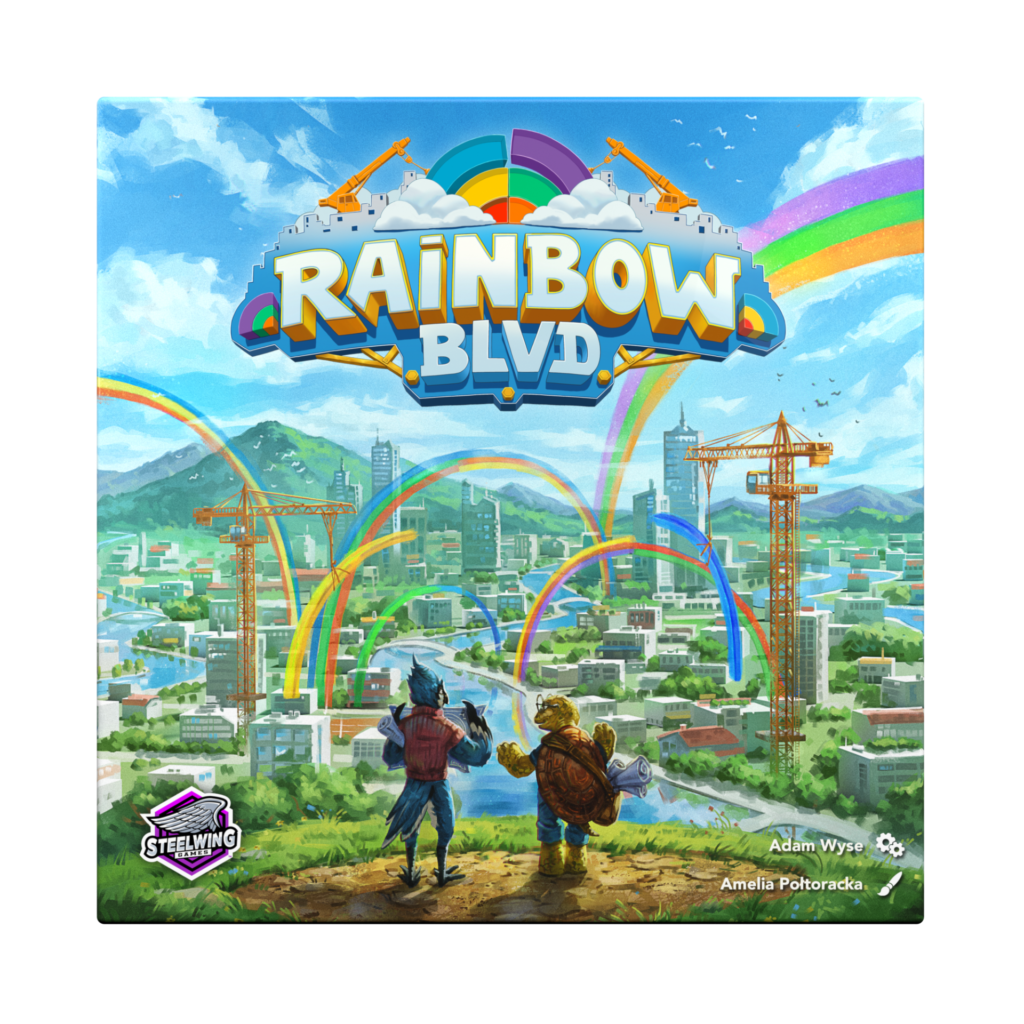
It was really a combination of timing, people, and product. Rainbow Blvd. is the perfect first game, it always has been. It has a fun identity, a strong table presence, it is easy to teach, and has the type of meaningful gameplay that Steelwing is focused on.
I also reached a point in my career where my experience across multiple areas (sales, marketing, crowdfunding, distribution, licensing, production, and working with designers) has given me the confidence to give Steelwing a thoughtful and responsible start.
What does Steelwing represent or offer that perhaps hasn’t been possible for you in your other board game industry roles?
Steelwing gives me the chance to build something from the ground up with a clear creative point of view. The goal is to publish games that are welcoming, polished, distinct, and deliver a satisfying and rewarding experience for players.
The name reflects that mission. The “steel” represents the experience and discipline I’ve built in the industry, while the “wing” represents using that experience to help create opportunities for others and give talented people new pathways into board games when and where we can.
At its heart, Steelwing is about making games we would be thankful to have in our collection while trying to leave the industry a little better than we found it, along the way.
The industry has been facing higher manufacturing costs, tariffs, freight disruption and increasing competition for attention. Many people might see this as a difficult time to launch a publisher. What makes you optimistic?
It is absolutely a challenging time, that can’t be minimized in any way. Costs are high, attention is hard to earn, and publishers need to be more thoughtful than ever about what we make and how we make it.
What makes me optimistic is that players still respond to games that they can connect with, that have that special feel, and are well cared for. This is a time to be disciplined, focused, and clear about why a game deserves to exist. That is the mindset I am bringing to Steelwing.
Of course it will be challenging. There is never a perfect time to start a new business. One of the principles I try to live by is, “Be good today and be better tomorrow.” Staying humble, listening carefully, continuing to learn, and making games that bring people joy, will result in positive outcomes for Steelwing and more importantly, for the community.
Having worked in the industry for more than a decade, which experiences most shaped the way you’ll run Steelwing?
Not to date myself, but it’s closer to two decades, and actually my second stint in the industry. A long time ago, in a galaxy far, far away (known as Poughkeepsie, New York), I had my first opportunity in games as a retailer, managing a local store called Iron Vic’s.
The experiences that have helped shape me are the ones where I’ve been able to see the full path a game takes from idea to table. A great design is essential, but game development, product development, manufacturing, communication, and post-release support all shape the experience players ultimately have with a game.
One night, while developing Rainbow Blvd., we realized the rainbow borders on some cards felt slightly different. Opening the files in InDesign, we found that one border was 13 pixels from the cut line and another was 15. Those two pixels bothered me more than they probably should have, but I knew someone, somewhere, would have that same subtle feeling that something was off. So we spent several hours fixing it. Was it necessary? Maybe not to some, but for me, it was 100% necessary.
I’ve also been fortunate to learn from many generous and experienced people across the industry. Those relationships have shaped how I think about publishing, leadership, and the responsibility that comes with bringing a game to market.
My goal with Steelwing is not to assume we’ll get everything right. We won’t. But experience gives us a better chance to be thoughtful, avoid preventable mistakes, and build trust with the people who help bring our games to life and with the people who enjoy them.
Your recent newsletter makes clear Rainbow Blvd. has been in development for years, with prototypes dating back to 2016. What made you confident about launching a new publisher with this title?
Rainbow Blvd. has had a long and amazing road, and I’m looking forward to sharing more of that story through our updates and crowdfunding campaign. At times, it has felt as though it has a life of its own. The core idea has stayed strong through a slow-and-steady development process, while the game itself has become more focused, more accessible, and more visually distinct over time.
What stood out to me is that Rainbow Blvd. has immediate appeal, while also providing a very satisfying experience underneath the surface. People are drawn to the colorful 3D rainbows and cozy city-building theme, and then after they play a turn or two, they find meaningful decisions, shared incentives, and strategic choices that make the experience engaging for many different types of players.
That is exactly the space for Steelwing to live in; games that feel welcoming regardless of a player’s experience level, while being memorable and rewarding. Great games have “stand up moments” where players feel rewarded for their choices, and even greater games leave players with that “I can’t wait to play again” feeling. Rainbow Blvd delivers on those two things and [designer Adam Wyse] has done a tremendous job developing it into something approachable, clever, and special! I’m excited to help bring it to players around the world.
What kinds of games are you actively looking to sign? What does a Steelwing game look like?
A Steelwing game should be welcoming and engaging while delivering a memorable experience. The experience is everything. Positive, clever, engaging, intriguing, and above all else, fun.
We are actually not actively looking for games, as we have a publishing plan in place until 2029. If and when we open up for submissions, some key elements are games that are teachable, replayable, and have a clear reason to exist on the table. Strong table presence helps, a unique theme helps, and unique components turn simple into satisfying. That is where my strength as a publisher is; taking a good game design and helping turn it into a full product that delivers a positive experience.
Are there any particular themes, mechanisms or types of games you’re especially excited about right now? Or any genres or play experiences you think are currently underserved?
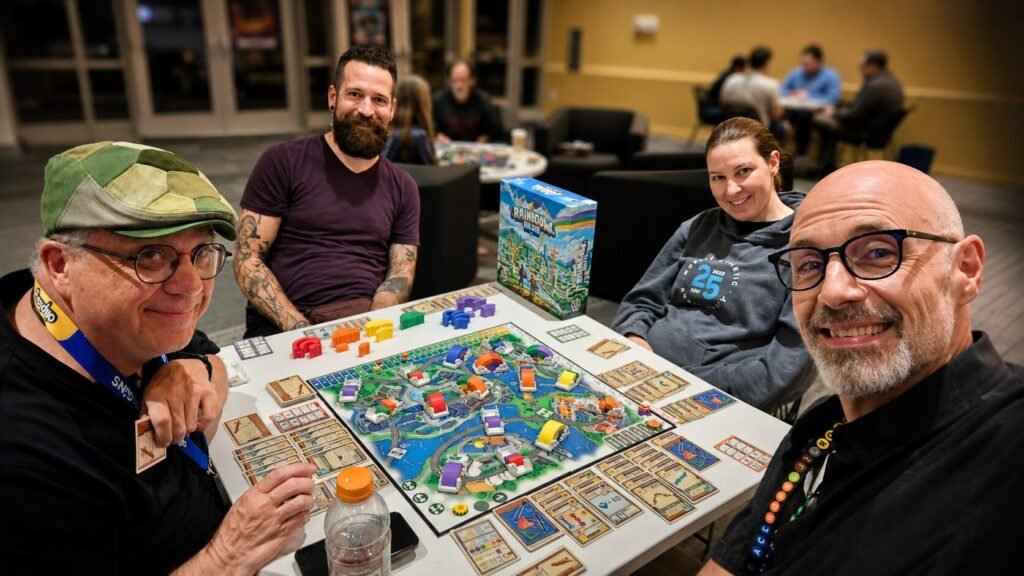
I believe there are still so many themes, mechanisms, and combinations in games that have not been fully explored yet. I’m especially interested in games that create positive interaction without relying only on direct conflict. I like games where players are paying attention to each other and the choices being made, where timing matters, and where the table feels alive, but not necessarily because players are attacking each other or tearing each other down.
Rainbow Blvd. is a good example of that. We’ve worked hard to make sure players stay engaged even when it is not their turn, because what other players choose can also create opportunities for others. That kind of shared excitement and mutual interest keeps the game active from turn to turn and feeling alive.
There is still a lot of room for beautiful, accessible strategy games, games that families, couples, casual players, and hobby gamers can all enjoy together for different reasons. As a wise person once said, “The people around the table are more important than the game on it.” I hope Steelwing games can help create many of those nights.
How many games are you realistically aiming to publish each year?
The plan is to stay steady, planned, and manageable. Realistically, the goal is not to publish a large number of games each year. I would rather do fewer games better than stretch the company too thin. Right now, we have Rainbow Blvd. crowdfunding this year on Kickstarter and delivering in 2027, plus an unannounced game to crowdfund in 2027 and deliver in 2028. Releasing games in a measured and manageable way is the pace to keep at the start and the primary focus.
Is the goal to remain deliberately boutique, or would you like Steelwing eventually to become more of a mid-sized publisher?
The goal is to grow responsibly. I’m not opposed to Steelwing becoming larger over time, but only if the growth supports the quality of the games and the experience for players. For now, I would describe the goal as focused. We want to be selective, build trust, and make each release feel intentional, delivering the best possible experiences to players.
Will you primarily publish original games, or are licensed titles also part of the long-term strategy?
Original games are the main focus, especially as we establish Steelwing’s identity. That said, I have a lot of respect for what a well-matched license can do when it genuinely supports the gameplay and audience. “Never say never” is the saying, but fit also matters. I am not looking to chase licenses for the sake of it, and our focus is on Rainbow Blvd and the next title, which is also an original, internal game. (Which, I can’t wait to talk more about, as it is also a very unique game like Rainbow Blvd. that gets me excited every time I play it.)
Are you actively accepting pitches? And if so, what kinds of games are you most hoping designers will bring to Steelwing? How should they contact you?
We’re not accepting unsolicited pitches right now. Steelwing already has a publishing plan in place for the coming years and I want to make sure we give those projects and relationships the attention they deserve. If and when we do open submissions, we’ll be looking for games that feel welcoming, replayable, visually engaging, and have a clear reason to exist on the table. However, I don’t want designers sending us projects before we have a proper process in place, especially if those games could be finding the right home elsewhere. We’ll share clear guidelines through SteelwingGames.com and our social channels.
Will every game crowdfund first, or do you plan to vary that from title to title?
Crowdfunding will be an important part of Steelwing’s strategy, especially early on, because it allows us to build community around each game and communicate directly with the players most excited about it. That said, I do not think every game has to follow the exact same path. The right approach depends on the game, the audience, the production needs, and the retail strategy.
Looking back over your career so far, what’s the biggest lesson you’re taking into Steelwing?
The biggest lesson I’m taking into Steelwing is that publishing is a long-term relationship business built on trust. A good game matters, of course, but so does how you communicate, how you treat people, how you handle problems, whether your decisions are sustainable, and how well you stand behind your product after it reaches the table.
I want Steelwing to be known not just for the games being made, but for being thoughtful, reliable, and committed to delivering exceptional experiences. Steelwing is intentionally lean right now, supported by a group of passionate and talented contractors, partners, and collaborators who believe in the goals and the games.
One of the things I love most about the board game industry is how accessible and personal it can still feel. I want to have direct relationships with our players. I want to hear their stories of fun, triumph, defeat, and laughter. And just as importantly, I want to hear where we can improve, because every release should help us get better at serving the people who choose to put our games on their table.
Are there any elements of being a publisher that you’ve experienced in your time in the industry that you’re deliberately trying not to do with Steelwing?
One of the most challenging things in this industry, and in life in general, is the art of saying “no” when it needs to be said. Every company has different pressures and constraints. For me, the goal is to avoid growing too fast, avoid overpromising, and avoid taking on games that cannot be given the attention they deserve. That means being honest about what can be done well, while being disciplined enough to say no when something is not the right fit.
You’re still part of Lucky Duck Games. How do you balance those responsibilities with running Steelwing?
The true answer is, “Very carefully”. My responsibilities with Lucky Duck Games remain my professional priority, and I take them seriously. I’m grateful for the opportunity I have here and for the talented people I continue to work with. Steelwing is a separate project, and I’m careful about keeping those responsibilities distinct. That means being thoughtful with my time, avoiding conflicts, and making sure Steelwing is built in a way that does not interfere with my daily obligations. Maintaining trust and professionalism matters a great deal to me.
If you were to look forward five years into the future of Steelwing, what do you hope you’ll see?
Five years from now, I hope I’ve grown to become a better publisher and I hope Steelwing has a meaningful catalog of games that people are excited to recommend to their friends and family. I would love for players to see the Steelwing name and feel like it stands for games made with intention, love, and care.
I do not think success has to mean being the biggest publisher. For me, success would be building something sustainable, respected, and joyful, both for the people who make the games and the people who play them.
Rainbow Blvd.’s Kickstarter pre-launch page can be visited here.