BoardGameWire is proud to be sponsored by:





Two former Lucky Duck Games executives are building a new French board game publisher around the international localisation business on which their ex-employer has decided to scale back – with several publishing partners following them to the company after Lucky Duck dropped plans for their titles.
Davy Spychala and Guillaume Poueys launched Moona Games in July alongside Aurora Game Studios founder Damien Chauveau, after Poueys was made redundant from Lucky Duck and Spychala left amid differences over the company’s direction.
The company is eyeing eight to ten releases annually – predominantly French-language editions of existing international games, while developing one or two original titles each year for worldwide release.
That approach contrasts with the strategy now being pursued by Lucky Duck, which was acquired by toy and game giant Goliath in 2024.
Lucky Duck global brand director Scott Morris told BoardGameWire in April that the publisher was reducing its third-party localisation work in favour of developing its own games, citing the resources required and the greater long-term value of owning intellectual property.
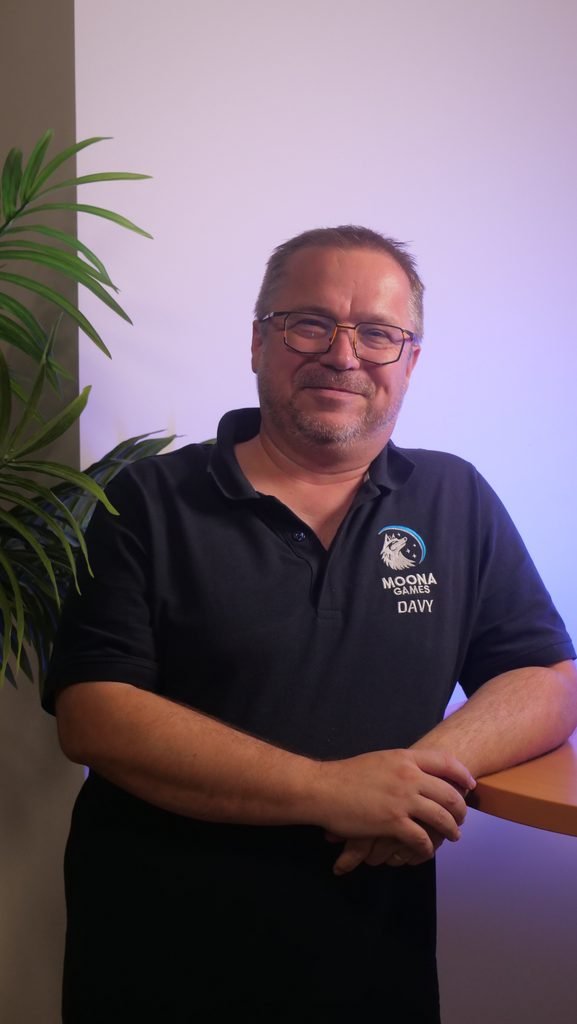
Speaking to BoardGameWire, Moona co-founder Spychala said, “Many of the international publishers we’d worked with for years chose to follow us rather than stay tied to a single localisation window – in some cases these were projects that had been announced but not yet formally signed when the change of ownership happened at Lucky Duck, and partners came to us directly once those deals fell through.”
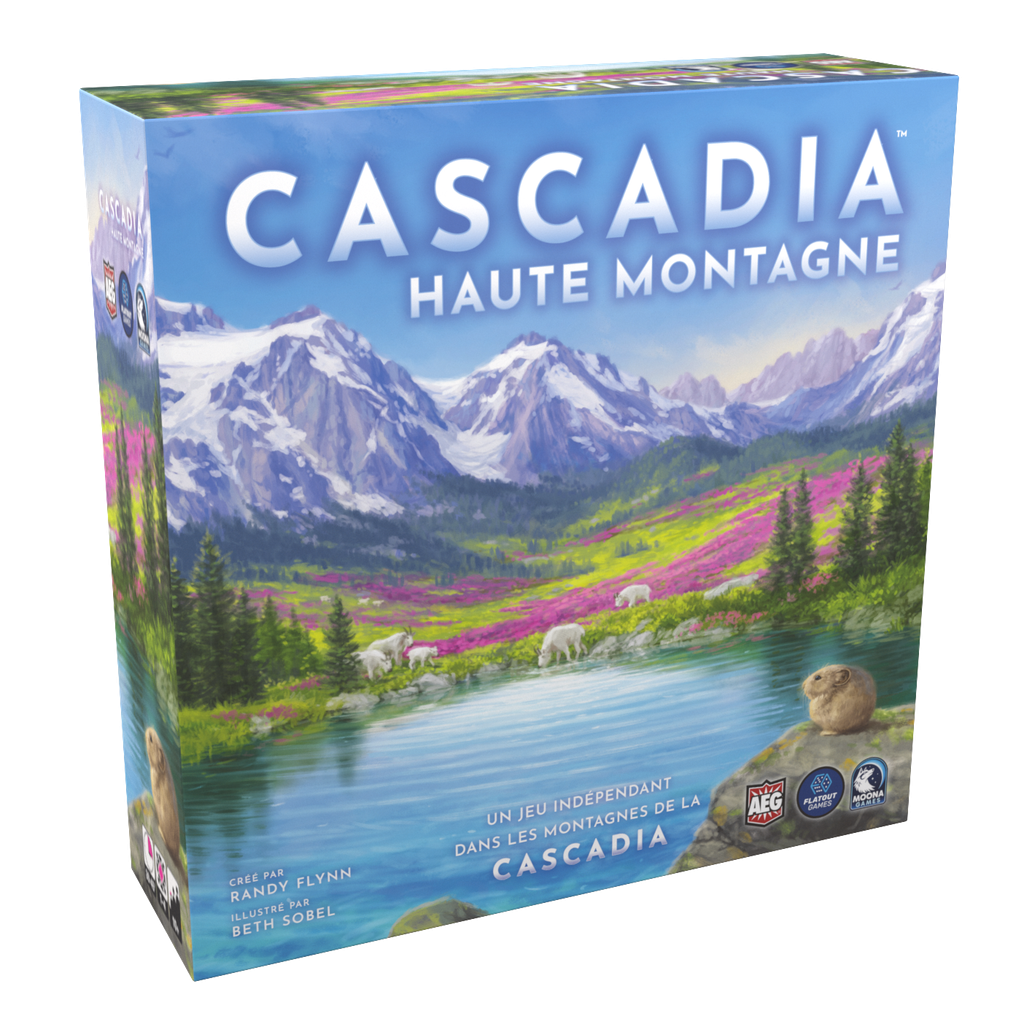
The publisher has already taken on French-language editions of Trinket Trove, Hanami and Cascadia: Alpine Lakes, all of which were among the projects Lucky Duck dropped from its planned release schedule earlier this year.
Moona has also secured agreements covering Tidal Blades 2: Rise of the Unfolders, Madcala, Knitting Circle and Lairs, and has established distribution partnerships covering France, Belgium, Switzerland and Canada.
Poueys told BoardGameWire that Moona’s creation had come together quickly in the wake of his redundancy, saying that around the same time Chauveau was considering separating the tabletop publishing activities of Aurora Game Studio from its video game operations.
The three founders realised they could combine their experience and existing industry relationships to build a new business, he said, rather than pursue separate projects.
Poueys stressed that the founders remained on good terms with Lucky Duck, saying the decision to establish Moona was “just two different visions of this business”.
Lucky Duck’s strategic shift has seen the company place greater emphasis on its own internally developed games, including its Chronicles of Crime franchise, which has sold more than one million copies worldwide.
Morris told BoardGameWire in April that while localisation had been an important part of Lucky Duck’s growth, it was “resource intensive” and dependent on external factors, while original publishing offered greater control over development, release schedules and long-term brand building.
He also highlighted the opportunities provided by Goliath’s global distribution network and manufacturing infrastructure, which he said were helping Lucky Duck expand into new retail channels.
Morris stressed at the time that the company was not abandoning localisation entirely, and said its Global Publishing Network business, which connects international publishers with regional licensing and localisation partners, continued to grow.
The changes have created opportunities for other publishers, however. In addition to Moona’s launch, former Lucky Duck country manager Michał Herman has joined Awaken Realms to lead its new Polish publishing division – which has taken over local publishing rights for several games previously handled by Lucky Duck, including Dune: Imperium, Cascadia and Sky Team.
For Moona’s founders, localisation remains an attractive business model as a core specialism, rather than one part of a broader publishing operation.
Spychala said, “Localisation lets us bring proven, well-received games to the French-speaking market without carrying the full development risk of an original title – the design and playtesting work is already done, so our job is execution: translation, layout and getting the release calendar right for our retail and distribution partners.
“That said, it is genuinely resource-intensive when done properly – coordinating translation, layout and manufacturing timelines across partners takes real bandwidth, which is presumably part of why Lucky Duck scaled it back.
“We think the difference is that it’s our core specialism rather than a secondary activity, so we’re built around doing it efficiently rather than treating it as overhead.”
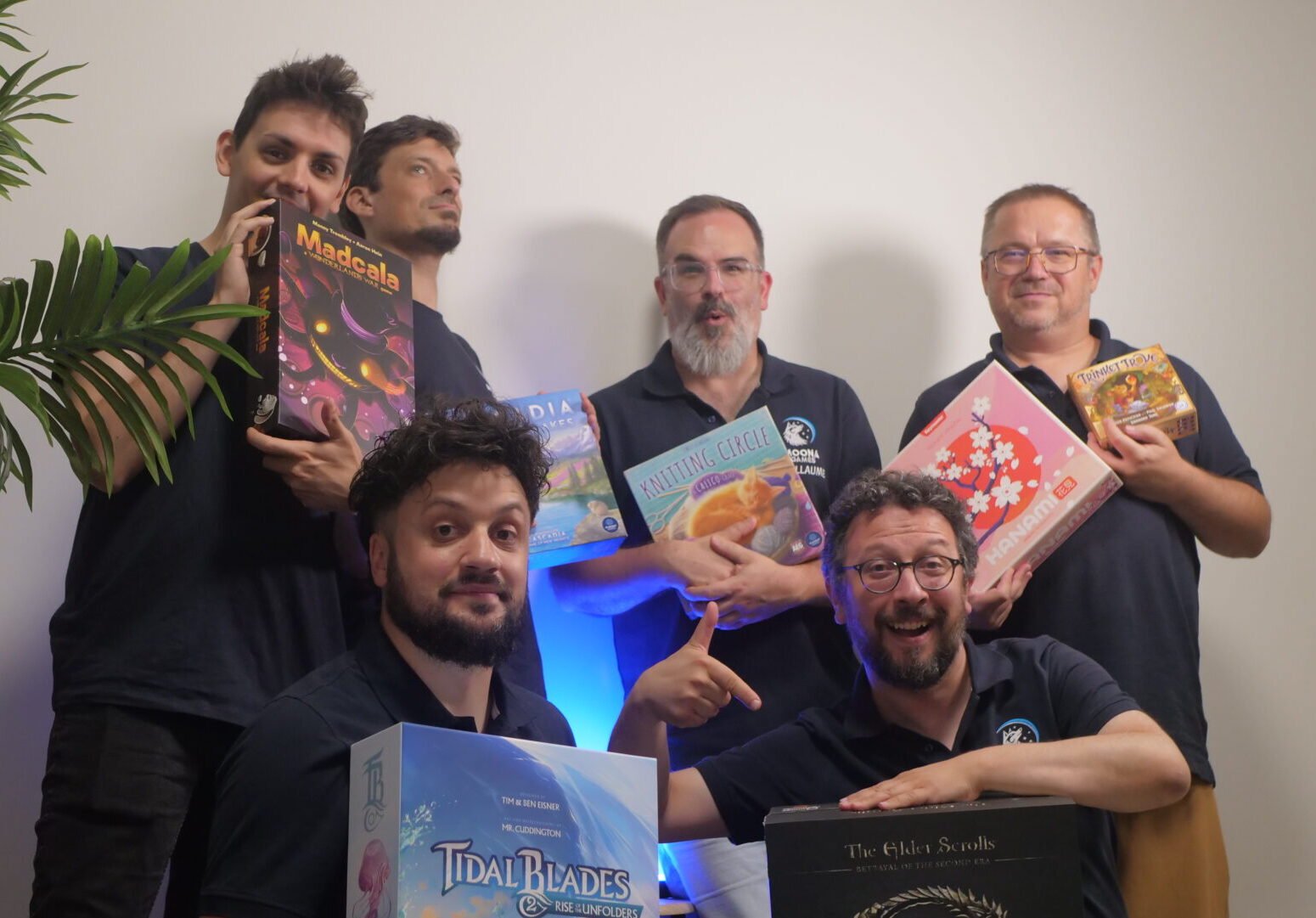
That specialist approach is also reflected in how Moona has structured its operations. The company currently has a six-person team, with Chauveau overseeing game development and editorial, Spychala handling commercial operations and sourcing, and Poueys responsible for marketing and communications.
They are joined by 3D specialist Rodrigue, layout designer Luc-David and Niels, who runs the French-language Jeux en carton YouTube channel and now leads Moona’s social media and video content.
But rather than immediately building a large permanent workforce, the founders have deliberately kept staffing costs low, with most of the team currently operating as associates rather than salaried employees.
Spychala said, “Between us, we’ve seen both sides – Lucky Duck’s quick growth and Aurora’s leaner, studio-driven model.
“At Moona, we’re being deliberate about staying close to our distributor and retail relationships rather than scaling headcount ahead of revenue: most of the team is currently on associate status rather than salaried, precisely to keep our cost base light while we prove out the model.”
Financing is another significant consideration for the new business, with Poueys saying launching a publisher at Moona’s intended scale required tens of thousands of euros for its initial manufacturing runs.
Moona’s initial financing strategy centred on two French-language releases – Babioles and Hanami – alongside a crowdfunding campaign for Tidal Blades 2: Rise of the Unfolders.
Poueys said, “We bet on two localised games in addition to a crowdfunding campaign to feed the bankroll by the end of the year.”
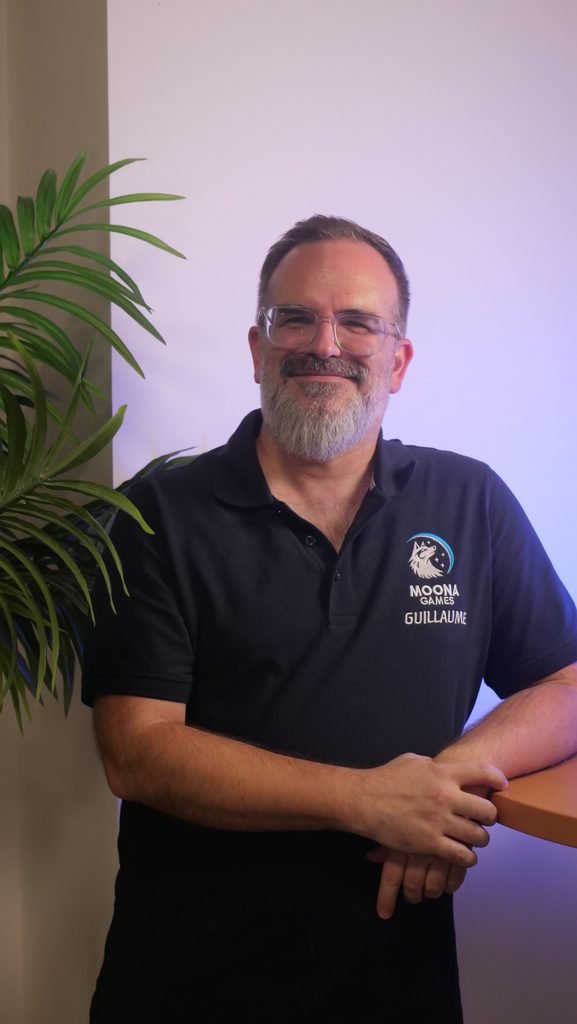
He added that the nature of Moona’s distribution agreements also helped to reduce its financial exposure, with distributors purchasing its inventory for onward sale to retailers, rather than leaving the publisher to carry the full burden of selling its stock.
Those arrangements have given Moona an established route to market despite its limited resources, with Néoludis distributing its games in France, Geronimo Games in Belgium, Randolph in Canada and Ludomania in Switzerland.
The company’s first release Babioles – the French edition of Trinket Trove – went on sale on November 6.
Spychala subsequently revealed that retailers had pre-ordered the entire initial 10,000-copy print run ahead of release, with a restock already underway. That figure represents orders from retailers rather than confirmed sales to consumers, but provides an encouraging early indication of demand.
Moona’s first crowdfunding campaign, meanwhile, for the French edition of Tidal Blades 2: Rise of the Unfolders, raised more than €120,000 through Game On Tabletop, with physical fulfilment scheduled for the final quarter of 2027.
Spychala said the plan was to run one or two campaigns annually for original studio titles, alongside a similar number for French-language localisations, while retaining capacity for games launched directly into retail.
Moona will also use its own webshop to take pre-orders for products within established ranges, including The Elder Scrolls and Too Many Bones, with crowdfunding reserved primarily for more ambitious projects where a campaign can help finance production and generate additional publicity.
Poueys said, “Crowdfunding makes sense specifically for ambitious localisations or original titles where the campaign itself builds global visibility and helps us find international localisation partners – Tidal Blades: Rise of the Unfolders is a good example.”
Spychala said Moona’s annual targets had been chosen around the team’s existing capabilities, rather than an ambition to expand its catalogue as quickly as possible.
He said, “It reflects what we know we can execute well without stretching the team too thin – we’re deliberately keeping most of our output to localisations, which we know how to run efficiently, while carving out capacity for one or two original studio titles a year under Damien’s direction.”
The founders expect to add about one member of staff each year, reaching a team of around ten by 2029, but intend to maintain a similar annual release volume rather than expanding its output.
Spychala said Moona’s launch had exceeded expectations, while Poueys singled out the enthusiastic response at September’s Vichy Professional Games Festival, where the publisher presented its initial catalogue to distributors, retailers and the press.
Poueys added that the company’s longer-term ambitions depended on finding games that could continue generating sales beyond their initial launch, rather than relying entirely on an ongoing stream of new releases.
He said, “Reaching a second – or even a third – reprint is a good indicator for building a catalogue supported by evergreens. As a publisher focused on the long term, this then allows us to take bold risks and bring innovative experiences to players.”