BoardGameWire is proud to be sponsored by:






Board games that are too expensive to manufacture, difficult to distribute or commercially risky to publish are getting their own showcase at PAX Unplugged next month, as a group of designers sets out to highlight the creative ideas that can fall by the wayside when games are developed with commercial viability in mind.
These Games Are Not For Sale will feature designs unlikely to reach retail shelves because of production costs, environmental concerns, intellectual property restrictions or other obstacles to conventional publishing – including an unpublished sequel to Pandemic creator Matt Leacock’s Era: Medieval Age.
Organisers Tony Tran and Gene Koo told BoardGameWire they created the inaugural showcase to challenge the assumption that getting a game published should be the ultimate goal of game design, and give players the chance to experience designs that might otherwise never find an audience.
“Earlier this year people started to notice how often board game design resources orient towards getting your game to publication,” Koo said.
“It felt to some of us that this was an unhealthy and maybe even unnatural perspective. It’s kind of like, how many guitar tutorials focus on getting a record deal?”
The pair said they had encountered designers at playtesting events such as Break My Game and Unpub who were less interested in securing publishing deals than simply finding people willing to experience their creations.
That spurred them to attempt to create something closer to an art exhibition or live music venue, where designers can present their work without needing to demonstrate its commercial potential.
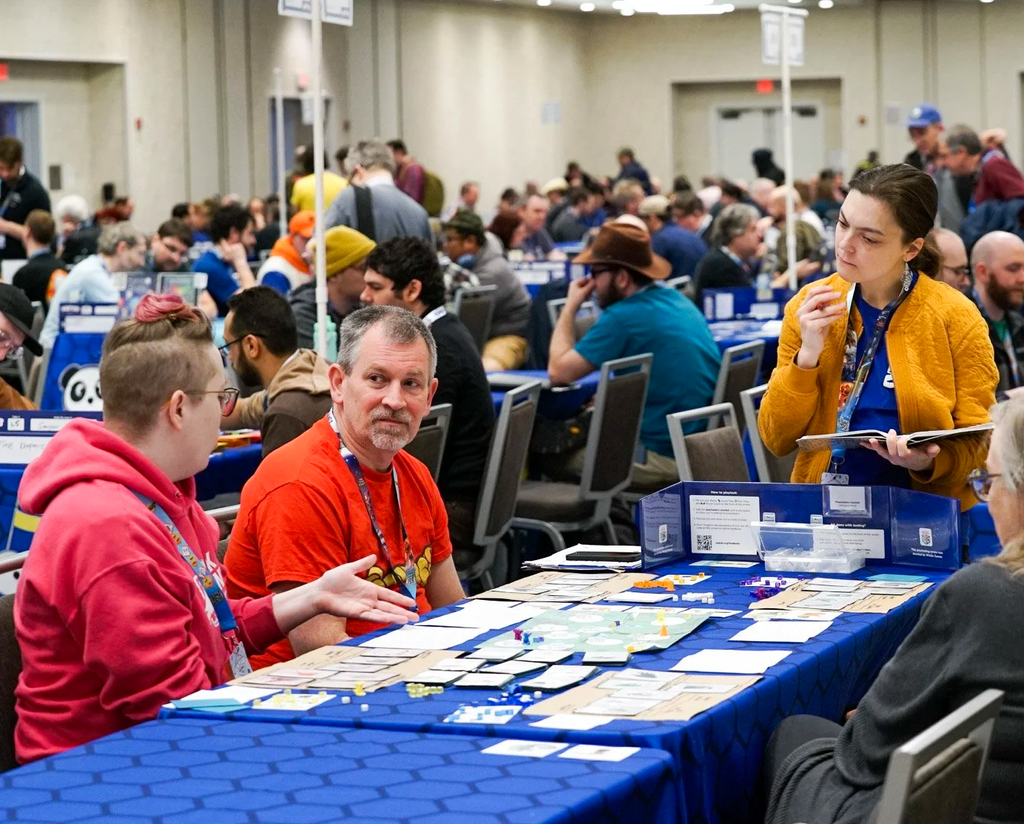
Tran said he had experienced the limitations of commercial publishing firsthand when pitching a co-operative game built around five opaque felt bags.
He recalled a publisher stopping the pitch before hearing how the game worked, explaining that each bag would add $5 to the game’s suggested retail price – putting the game’s minimum retail price at $25 before accounting for any of its other components.
“Opaque felt bags just do not scale,” Tran recalled being told.
“I know designers (myself included) that have had pitches stop because the components would not financially work,” he said.
“We expect a certain experience with a certain price tag and some components just price out certain experiences.”
The organisers acknowledged the commercial realities facing publishers, from manufacturing and shipping costs to component sourcing and retail pricing – but argued that those constraints might prevent designers from exploring ideas that might interest players without necessarily making profitable products.
“If you are making a game for game’s sake, you can relieve yourself of all those design limitations and push game design further,” he said.
“I truly believe there are new mechanisms, themes, ideas, audiences untouched by the tabletop community and there are not enough avenues for those games to exist.”
He added, “Currently we are just tapping into the tip of the iceberg here. Once this event reaches more people, I think more and more designers will realize they can just design for fun and/or art.
“Gene and I believe that the best games we have ever played are unpublished games. Whether we play them at Unpub or Break My Game or any number of playtesting groups, the truly unique games have not been affected by market viability.
“I hope mainstream players see this event and realize that as well.”
The PAX Unplugged showcase will highlight several different obstacles to conventional publication, through games including Leacock’s Era: Babylon – an unpublished follow-up to his 2019 roll-and-build game Era: Medieval Age.
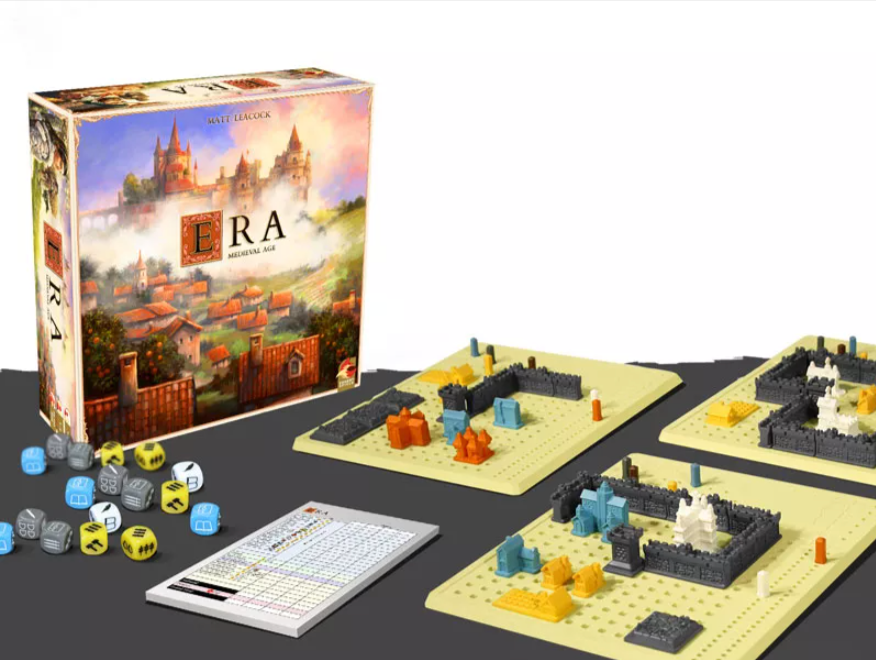
Leacock told BoardGameWire earlier this year that he was increasingly reluctant to design games containing large quantities of plastic for environmental reasons – specifically citing the original Era.
He revealed at the time that he had an unpublished follow-up he was unsure what to do with “because it just requires a metric ton of plastic”, adding “So I’m like ‘I don’t want to do that’.”
Other designs appearing at the event include games with unusually large components, games which use magnets and introduce potential product liability concerns, and games based on intellectual property that their creators do not have the commercial rights to exploit.
One game, Xoe Allred’s OkEros, requires its designer to be present to guide the experience, making it impractical to reproduce as a conventional boxed product.
“It cannot put Xoe in every box for obvious reasons,” Tran said.
Koo said the industry’s emphasis on publication could also “squash innovation”, with designers increasingly encouraged to anticipate what publishers might want rather than pursue their own ideas.
“Trying to guess what publishers want, when publishers are trying to guess what players want, seems like a box of mirrors,” he said.
“One of the most annoying bits of feedback I sometimes hear from designers is oriented towards publishability rather than what makes the game special. Unless that’s specifically what the designer asked for, it’s rarely helpful.”
He added, “I worry about designers who never even start because publication seems unrealistic. Especially those from marginalized backgrounds where doing common things like attending a convention to pitch is out of reach.”
The organisers stressed that they were not opposed to commercial publishing, and would welcome a publisher expressing interest in one of the showcased designs.
“That would be great!”, they said. “We don’t intend this event to poke publishers in the eye. We’re not encouraging people to be like a 90s grunge band who refuses to sell out.
“If a publisher walks by who happens to have the tabletop game rights to a certain film franchise burning a hole in their pocket, or has a team of lawyers who specialize in product liability and magnets, good for them.”
They suggested that unscalable might ultimately be a more accurate description of the games than unpublishable, given the opportunities for independent publication through print-on-demand, digital distribution and other alternatives to traditional retail releases.
But they also recognised that describing games as unpublishable risked suggesting they were unfinished or not good enough to attract a publisher, rather than simply commercially impractical.
“We want our message to be that unpublished games aren’t necessarily ‘worse’ than published ones,” the organisers said.
“We certainly don’t want the event to feel like a ‘participation trophy’ for unpublished games.”
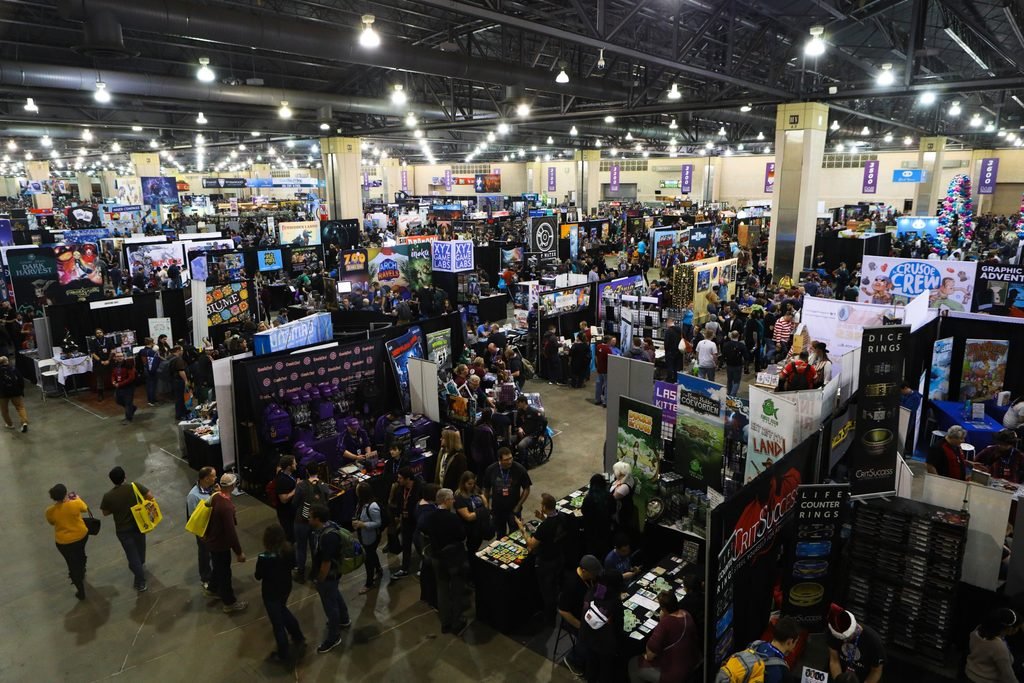
These Games Are Not For Sale will take place in the Terrace Ballroom at Pax Unplugged on December 5, with participating designers demonstrating their games and discussing the initiative during a panel.
The organisers said, “Success, for us, would be that a lot of players come and think differently about what tabletop games are and can be. Perhaps we spark some interest among them to design games themselves, whether they show them to the public or not.
“Success would also include the designers feeling like they got to express what they were intending through their game.
“In both of those respects, I think we’d measure success the way people who organize an art exhibit might. In fact, I do think of this event as analogous to an art exhibit or film festival.”
Tran and Koo hope the event will encourage more designers to create games without publication as their ultimate objective, and could become a recurring showcase if there is sufficient interest.
“Designing games is not a line where you move from point A to point B”, Tran said. “Designing games is a space to explore human behavior, relationships, complex puzzles, introspection, and agency.”
He added, “I’d like more people in the hobby to embrace designing games as an artistic hobby and not one that always ends as a product shrink wrapped on the shelf.”